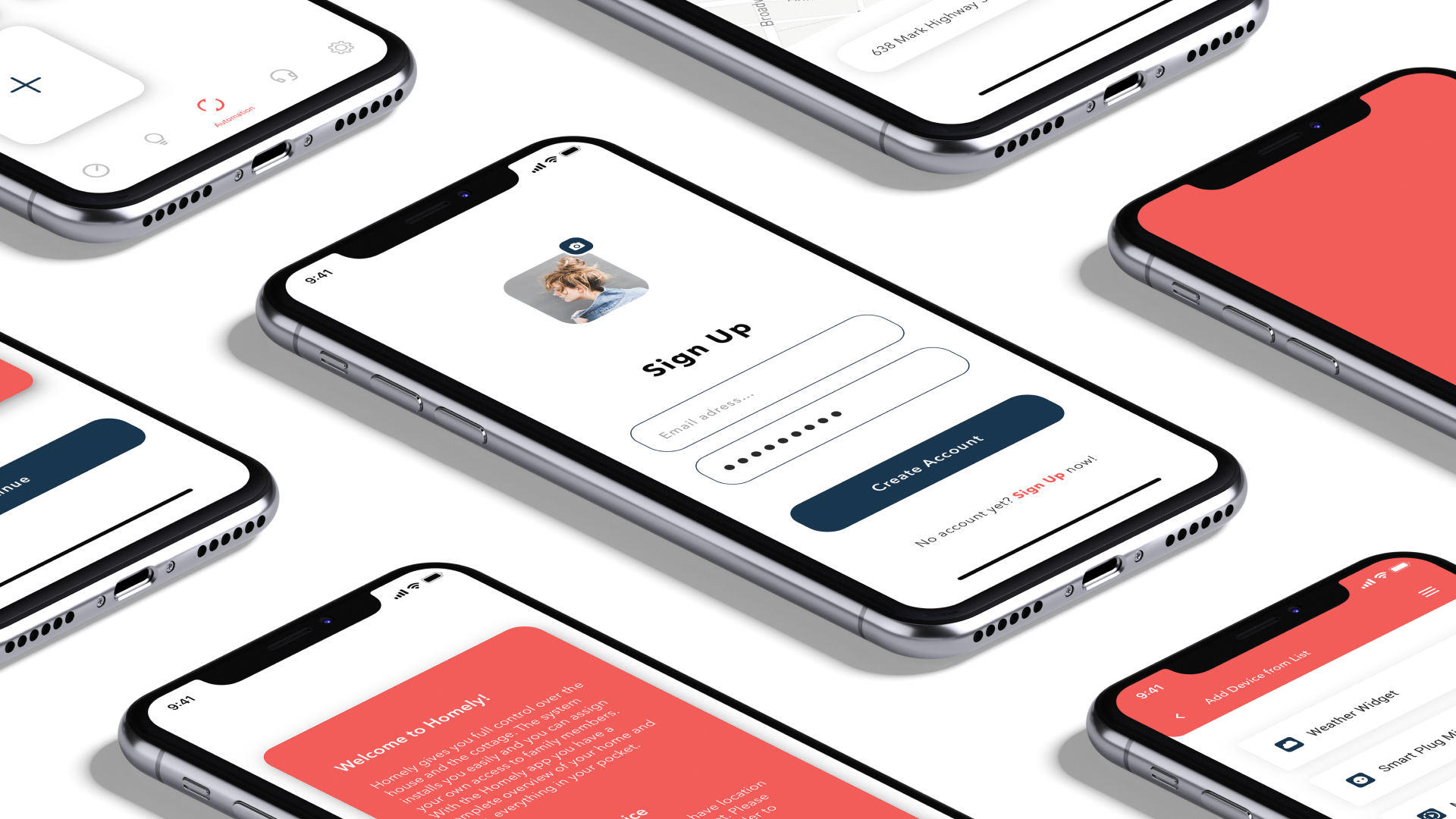
Redesigning a smart home app for real world activation
Homely® — Redesigning smart home onboarding for real-world activation
Increased onboarding completion by 42% and doubled engagement through research-led UX strategy
Role: Lead Product Designer
Duration: 5 months
Team: PM + Engineering + Research
Scope: Strategy, UX architecture, validation
Impact: +42% activation • 2× engagement • −37% support load
Business context - Why this mattered
Homely was bundled with smart home hardware, but the app failed to convert buyers into active users. Setup friction caused high abandonment, low device pairing success, and increasing support costs. If unresolved, the ecosystem risked stagnation despite strong hardware sales.
This was not a visual problem — it was a growth bottleneck.
Ownership - Leadership scope
I led the UX direction of the redesign, aligning product goals with measurable activation outcomes. I owned research framing, interaction strategy, validation loops, and cross-team decision making.
This project required product leadership, not just interface design.
Key insights - What changed direction
Research revealed that onboarding failure was driven by cognitive overload and lack of confidence:
Users didn’t understand device hierarchy.
Technical language created fear of breaking something.
Long operations lacked feedback, causing anxiety.
The core barrier was emotional friction, not usability polish.
Strategic decision - The pivot
Instead of simplifying screens, we reframed onboarding around confidence and guidance.
The strategy focused on progressive disclosure, real-time feedback, and visible success signals. The north star metric became successful activation within five minutes.
This shifted the project from redesign to behavioral engineering.