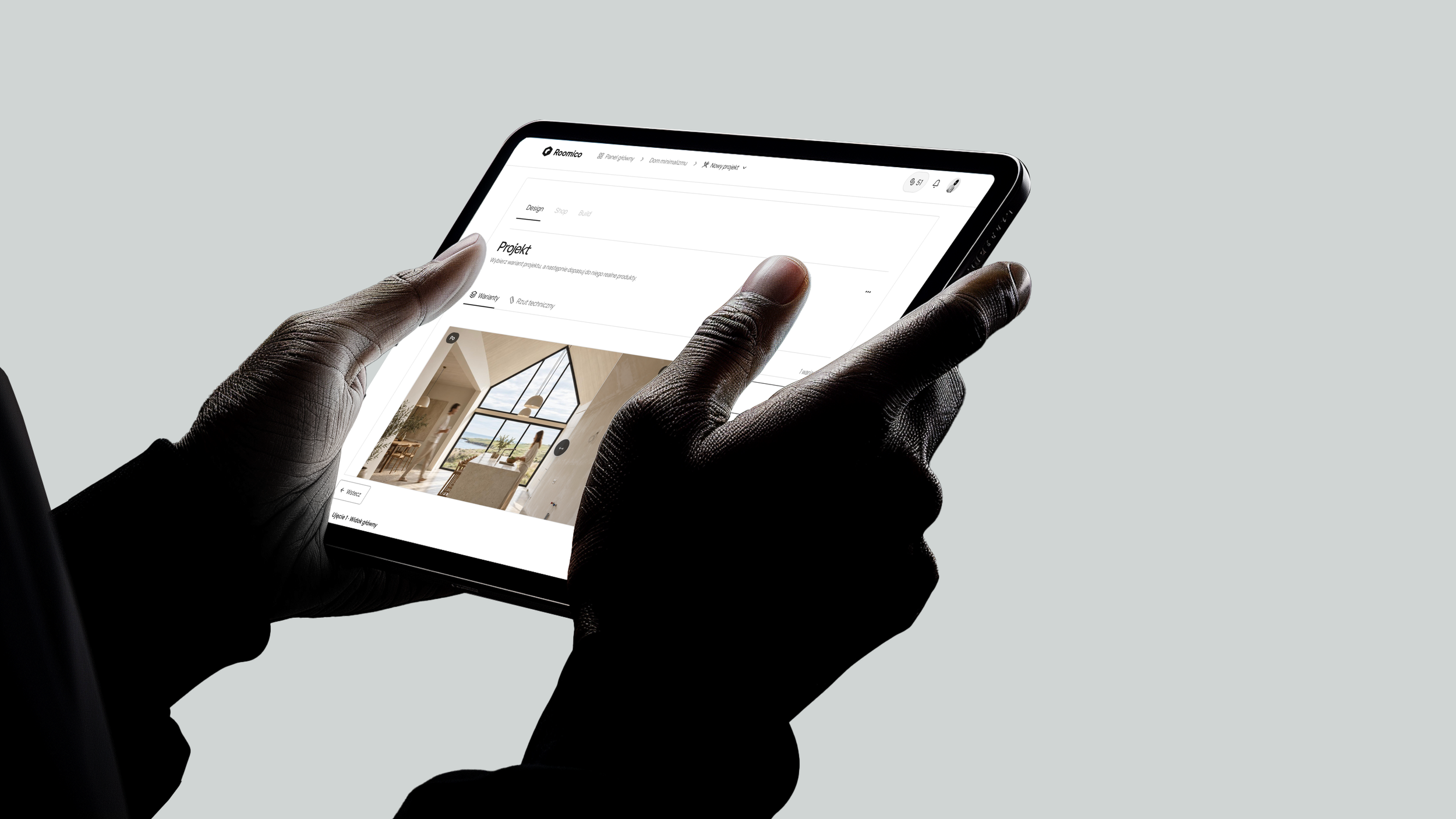

Roomico® is an independent product I created to bring interior planning, furniture selection, and AI-assisted visualization into one connected experience.
Rather than stopping at static prototypes, I took the idea further - shaping the user experience, coordinating implementation with AI-assisted coding tools, testing real functionality, and deploying a working web application.
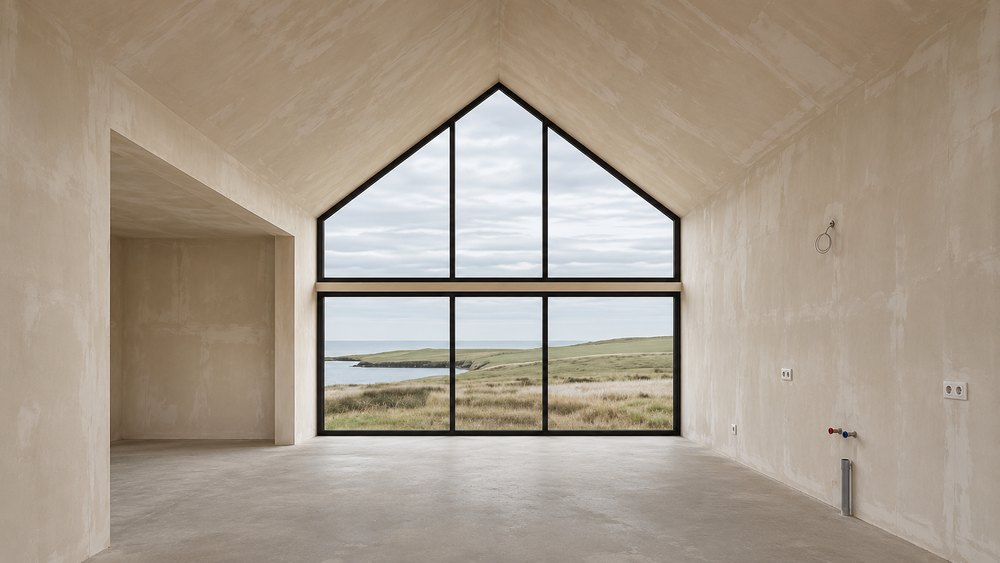
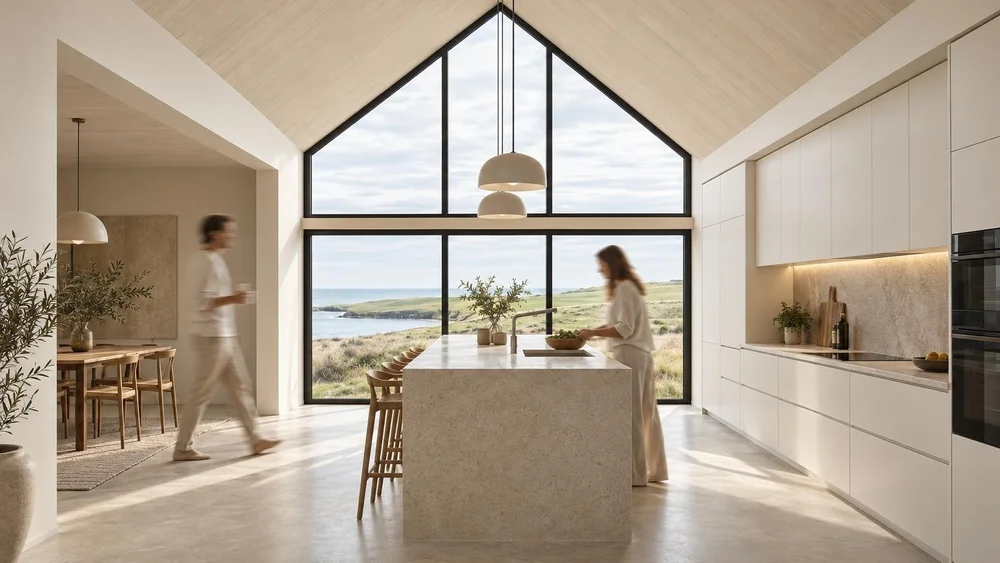 Before
After - AI
Roomico® AI Interior Engine
My role: Product Designer & Product Owner
Product: Web application and browser extension
Focus: Product Strategy, UX/UI, Product Architecture, AI-assisted Development
Technology: Figma, Codex, GitHub, Supabase, Vercel
Status: Live product, actively evolving
From MVP to Market-Ready Product
A working MVP in just 7 days. The real work continued after that.
I built the first functional version of Roomico in one week, combining product design with AI-assisted development using ChatGPT, Codex, and GitHub.
The goal wasn't to build every planned feature. It was to validate the core product concept through working software rather than static prototypes.
Over the following weeks, my focus shifted from rapid feature development to improving code quality, integrating Stripe, strengthening security, and preparing the application for paying customers.
01 / Rapid MVP Development
Built a functional MVP in just 7 days using AI-assisted coding to turn product requirements into working interfaces and core workflows.
02 / Code Quality
Refactored the initial codebase, improved its structure, and introduced a more reliable development process with testing and iterative improvements.
Key Takeaway
AI helped me build faster. Product ownership taught me what it takes to build responsibly.
Creating the first MVP took seven days, but preparing the application for real customers required a different mindset - one focused on reliability, security, maintainability, and business-critical workflows.
03 / Payments & Logic
Worked on Stripe integration and a credit-based model for AI features, focusing on transaction consistency, authorization, and failure handling.
04 / Security & Deploy
Strengthened access controls, tested critical backend workflows, and reviewed deployment, error handling, and operational requirements to prepare Roomico for paying customers.
Making interior planning feel more connected.
Planning an interior involves more than choosing furniture or generating attractive images.
Ideas, products, rooms, design alternatives, and practical decisions all need to come together.
Roomico® explores how these activities can be organized into a single digital workspace, with AI supporting the visualization and development of interior concepts.
The product opportunity was to connect inspiration with an actionable planning process.
The product question
How might we help people organize their interior projects, explore design alternatives, and make more informed decisions within one connected experience?
My Role & Ownership
Taking ownership beyond the design file.
As the creator of Roomico®, I lead the product direction, user experience, and ongoing development process.
My responsibilities go beyond designing interfaces. I define product requirements, prioritize functionality, shape the information architecture, create interaction patterns, and coordinate implementation using AI-assisted development tools.
I also test functionality, review design and implementation outcomes, investigate issues, and make decisions about what should be improved, simplified, or removed.
My responsibilities:
Product Strategy & Feature Prioritization
UX Research & Problem Definition
Information Architecture & User Flows
UI Design & Design Systems
AI-assisted Implementation
Quality Assurance & Iteration
Release Coordination & Deployment
Product Architecture
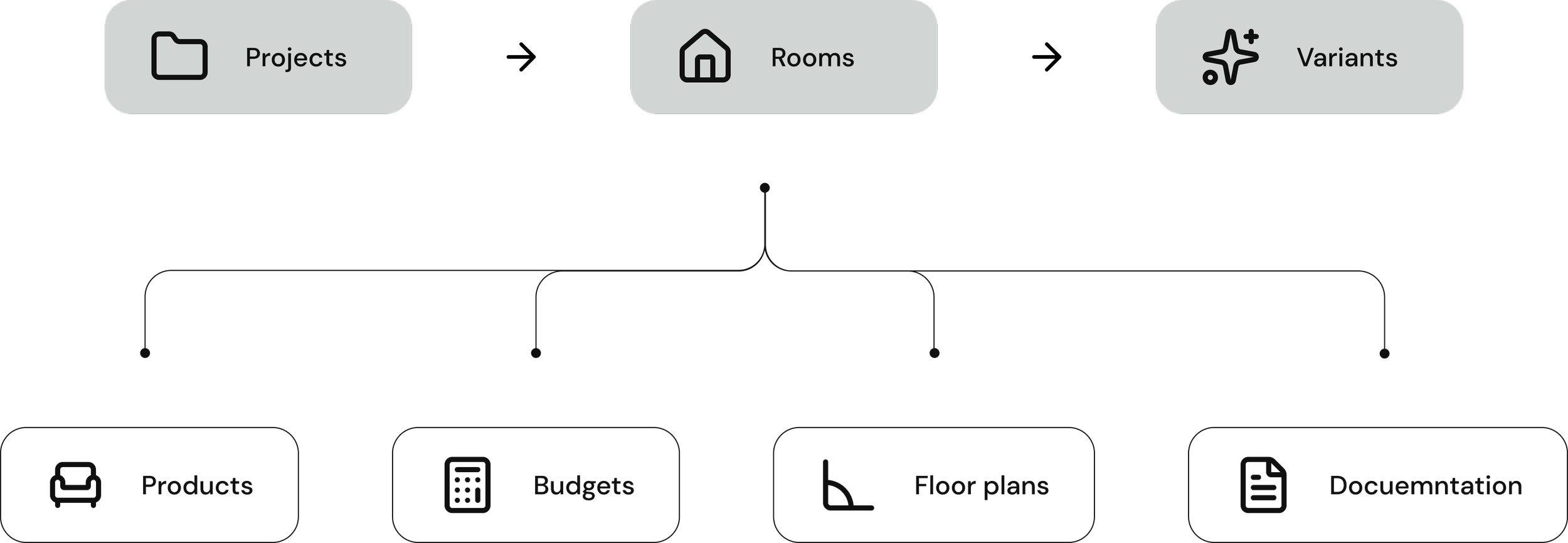
Roomico® is structured around projects, rooms, and design variants.
This hierarchy allows users to organize different interior spaces, explore alternative design directions, and keep related information within the same project.
As the product expanded, maintaining a clear relationship between rooms, products, visualizations, costs, and documentation became an important architectural challenge.
Rather than designing isolated tools, I focused on a shared structure that could support new functionality without making navigation increasingly complicated.
Key design principle
Build a consistent foundation that allows users to move between creative exploration and practical planning without losing context.
The Core Experience
Bringing interior ideas together in one workspace.
Roomico® combines project organization, AI-assisted visualization, product discovery, and design exploration into a connected workflow.
The challenge was to make these capabilities accessible without overwhelming users with unnecessary complexity.
01 / Organize projects and rooms
Users can create projects, divide them into individual rooms, and manage multiple design variants.
I designed the experience around a predictable hierarchy, helping users understand where they are and how different pieces of information relate to each other.
02 / Explore design possibilities with AI
Roomico® allows users to explore interior concepts through AI-assisted visualization.
The interface brings together image inputs, design options, and generated results, making it possible to compare alternatives and refine design directions.
My focus was on making a technically complex process feel approachable, with clear inputs, meaningful feedback, and understandable results.
03 / Discover and organize products
Product discovery is an important part of turning visual inspiration into a practical interior plan.
Roomico® connects furniture and material selection with projects and rooms, including support for Google-powered image search.
The goal was to help users move from finding an interesting product to organizing it within their planning workflow.
04 / Compare and refine alternatives
Interior design rarely follows a single direction.
By organizing multiple variants within the same room, Roomico® supports experimentation while preserving the context of each alternative.
This structure helps keep design exploration organized as projects become more complex.
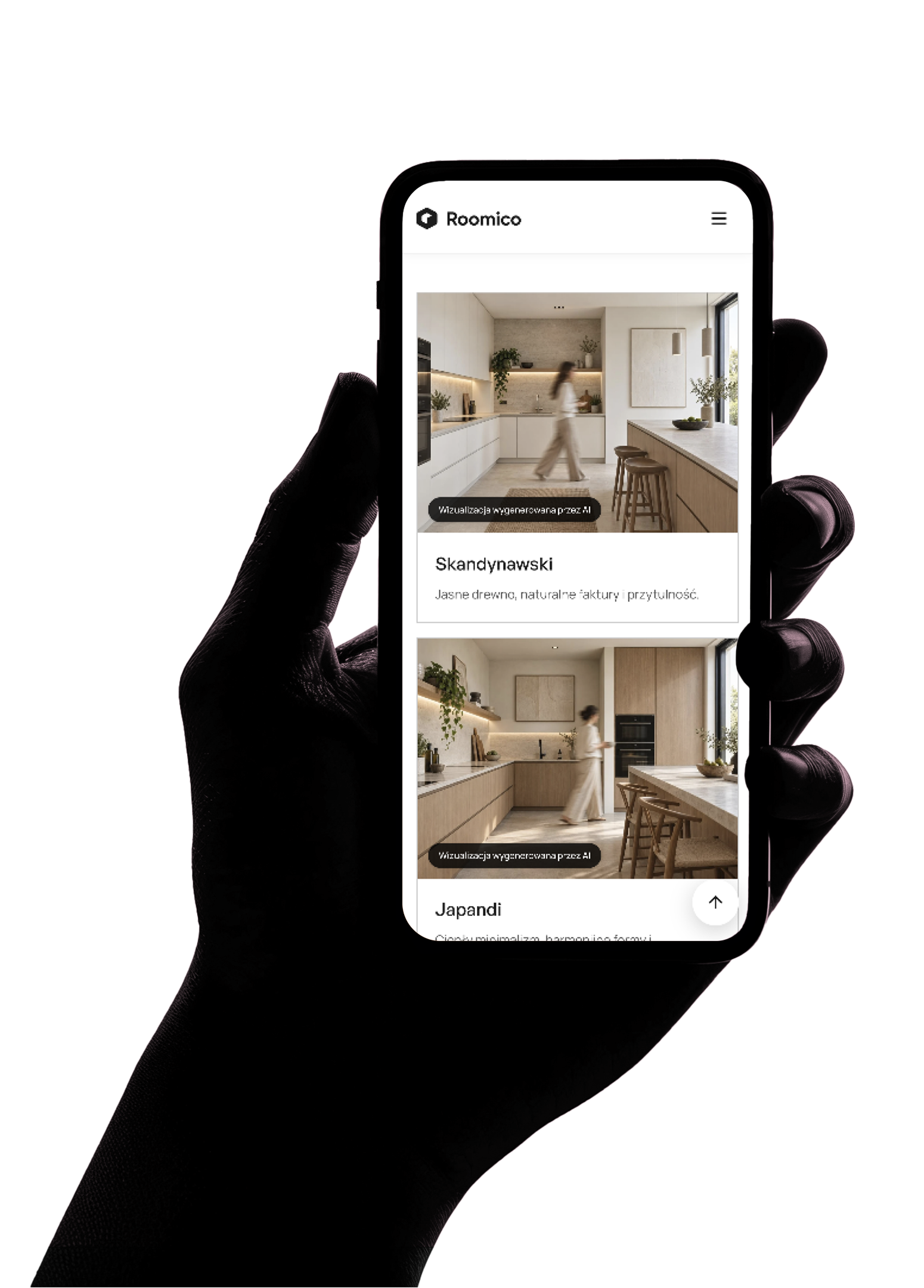
Exploring Different Interior Styles
Roomico® allows users to choose an interior design style and generate AI-assisted visualizations of their room in different aesthetic directions.
From Scandinavian minimalism and Japandi to industrial interiors, users can explore how different materials, colors, and design choices influence the character of a space.
The experience was designed to make style exploration accessible, helping users compare visual directions before committing to a particular concept.
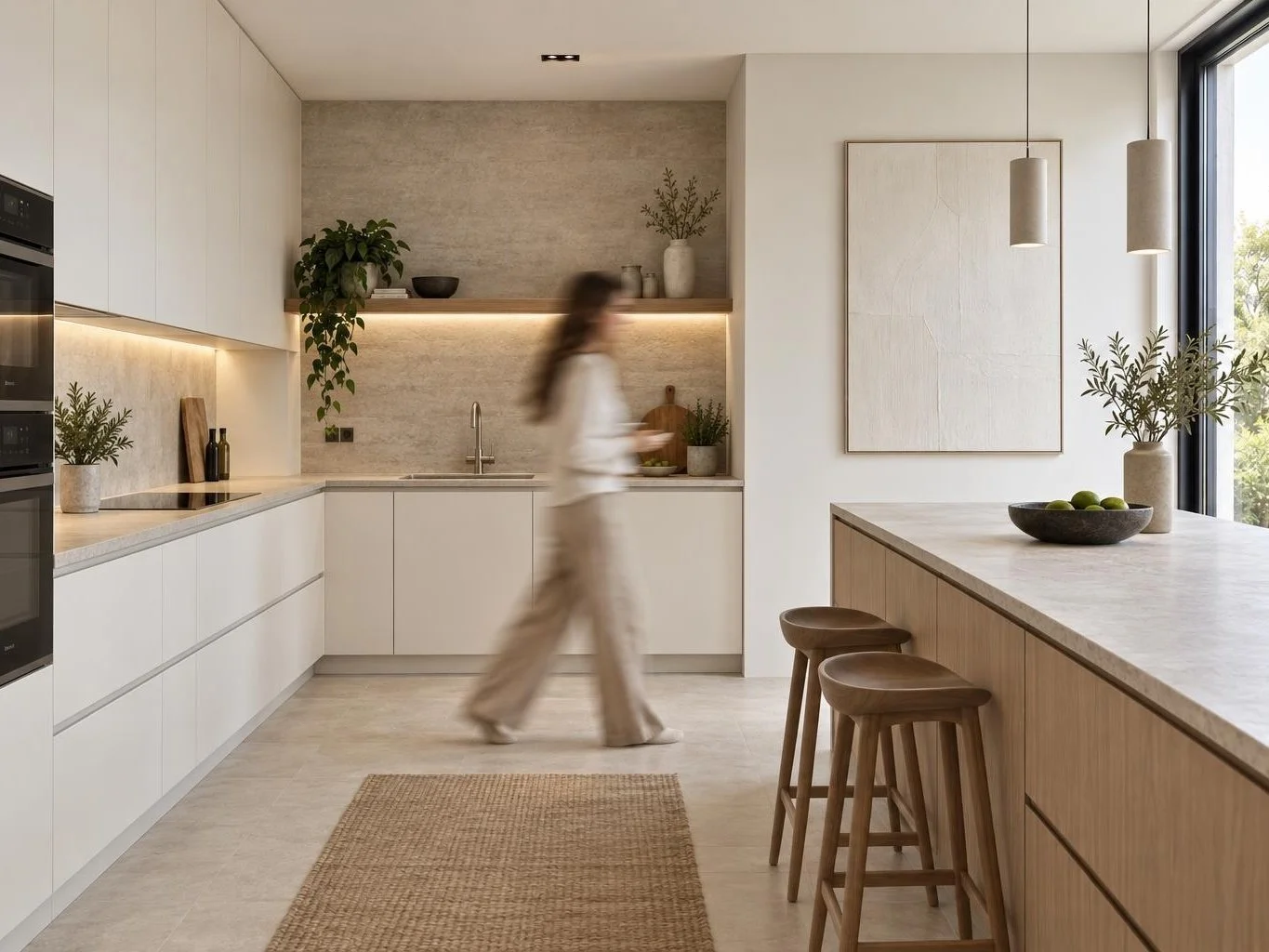
Scandinavian
Light-colored wood, natural textures, and coziness.
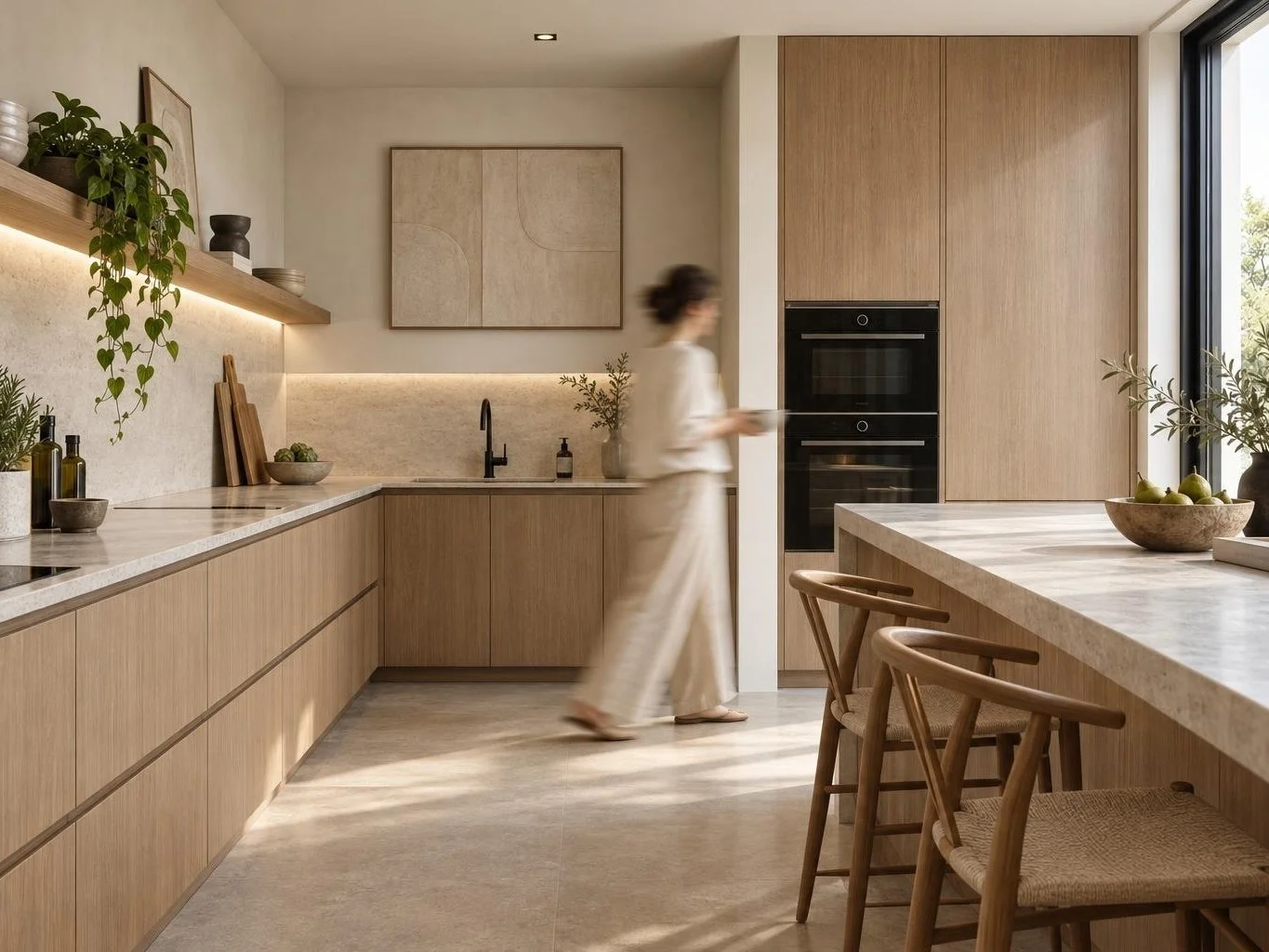
Japandi
Warm minimalism, harmonious forms, and timeless simplicity.
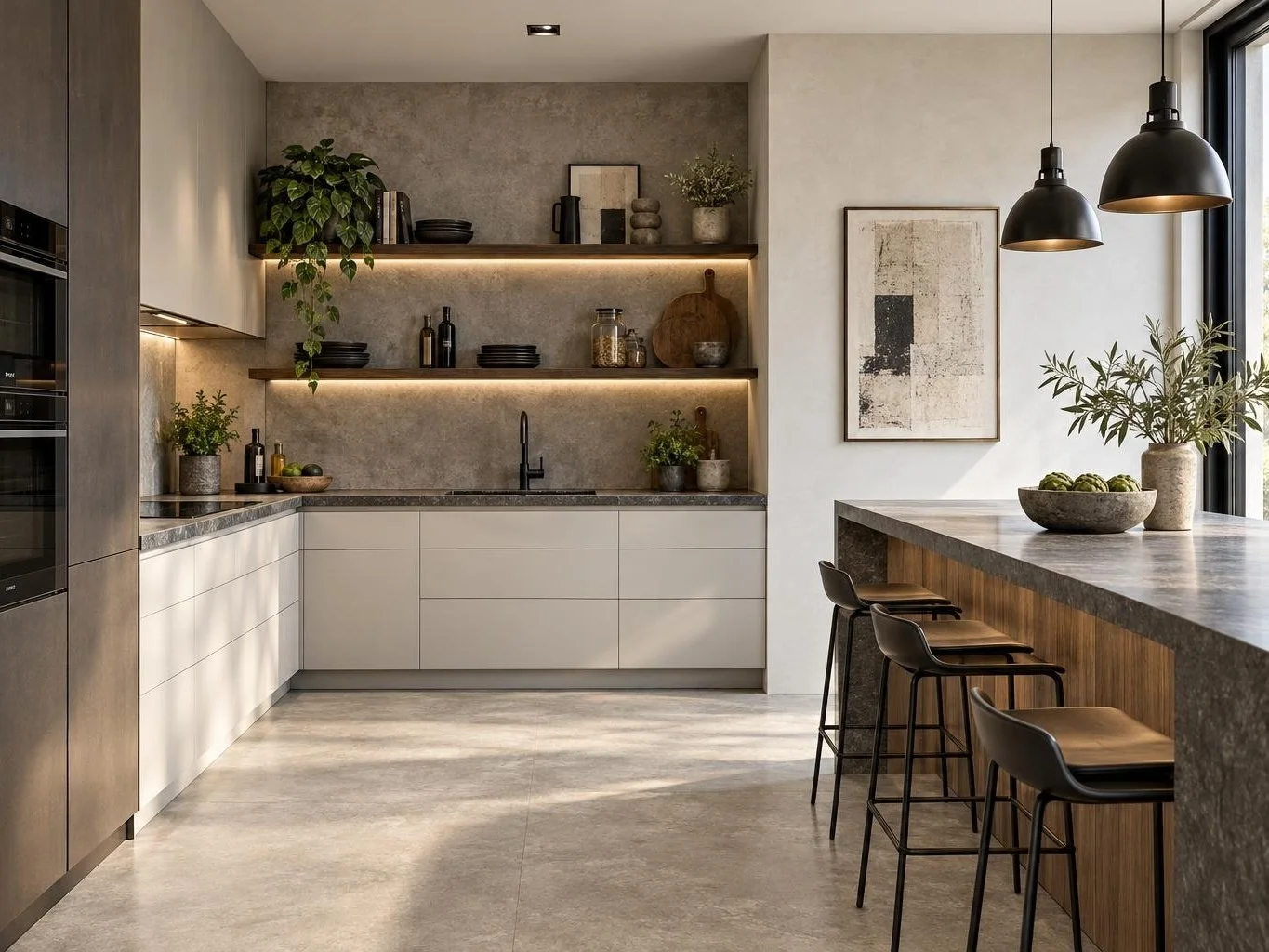
Industrial
Raw textures, bold contrasts, and a modern character.
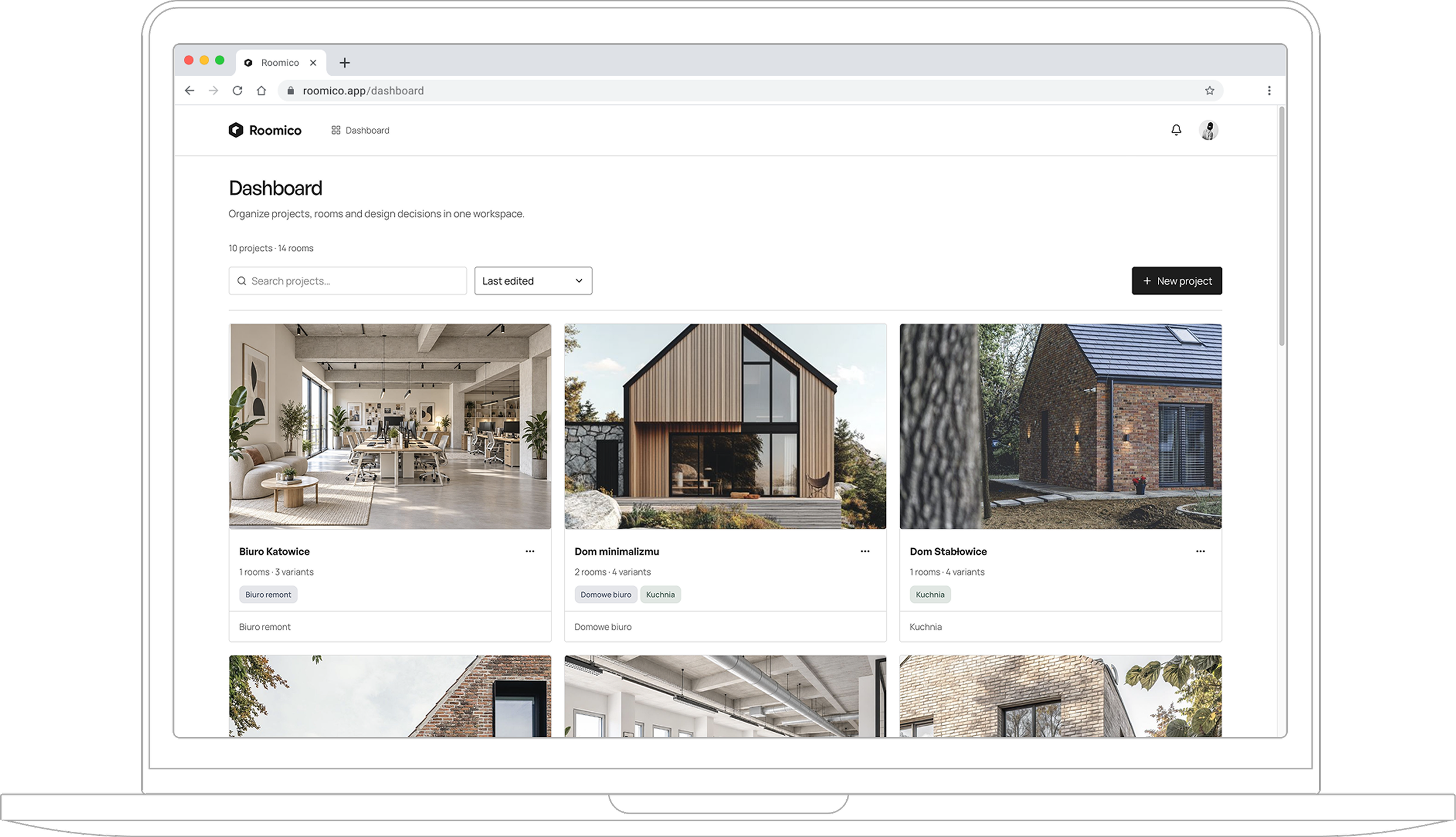
Roomico® dashboard
Exploring Interiors at Different Times of Day
Same space. Different atmosphere.
Lighting plays an important role in how we perceive an interior. The same room can feel completely different depending on the time of day, natural light, and overall atmosphere.
Roomico® allows users to choose a specific time of day when generating an AI-assisted interior visualization.
This gives users more control over how their space is presented, helping them explore different lighting conditions and understand how these can influence the appearance of materials, colors, and furniture.
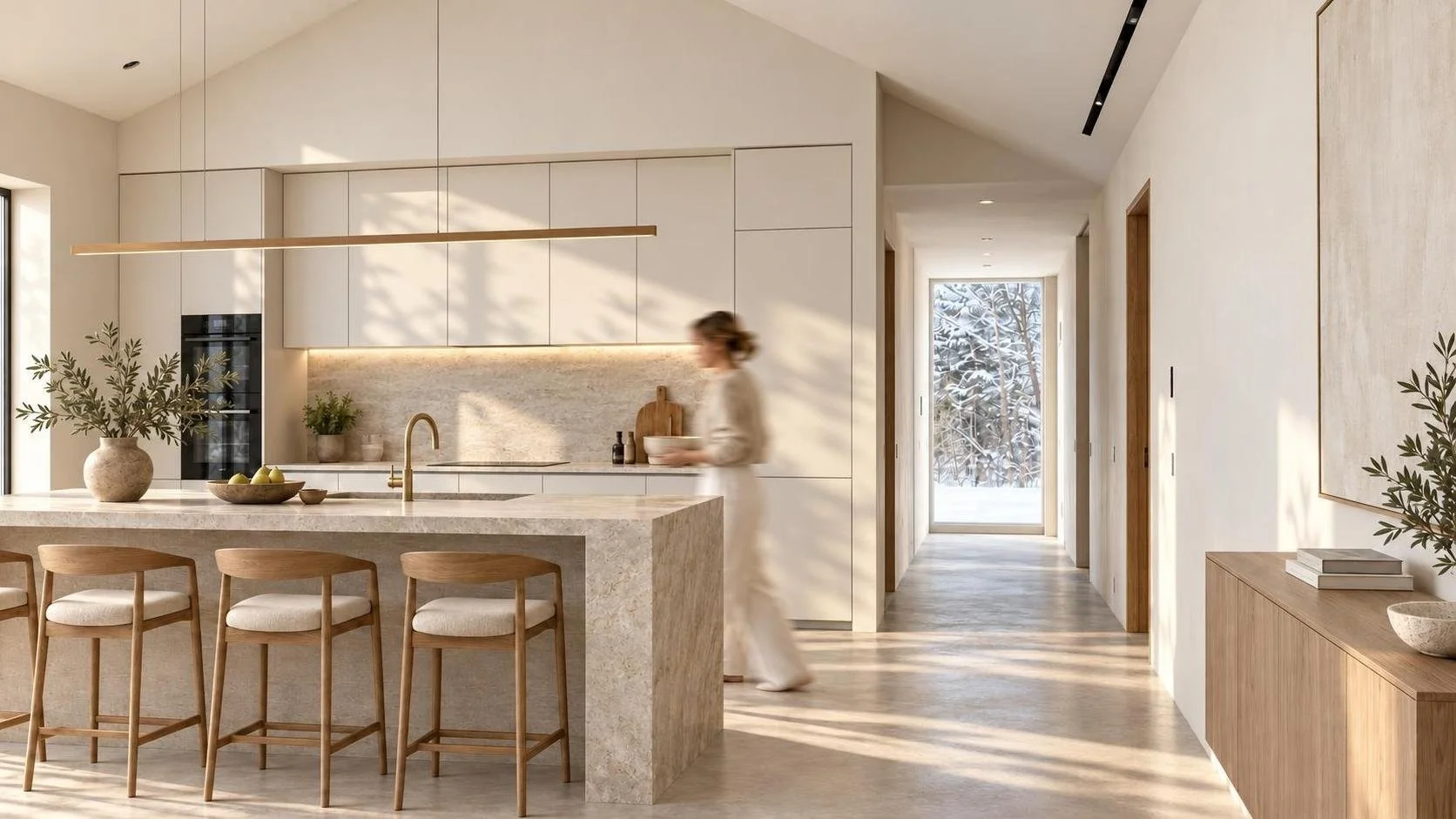
Morning
Soft morning light brings freshness and calm, creating a bright and gentle atmosphere.
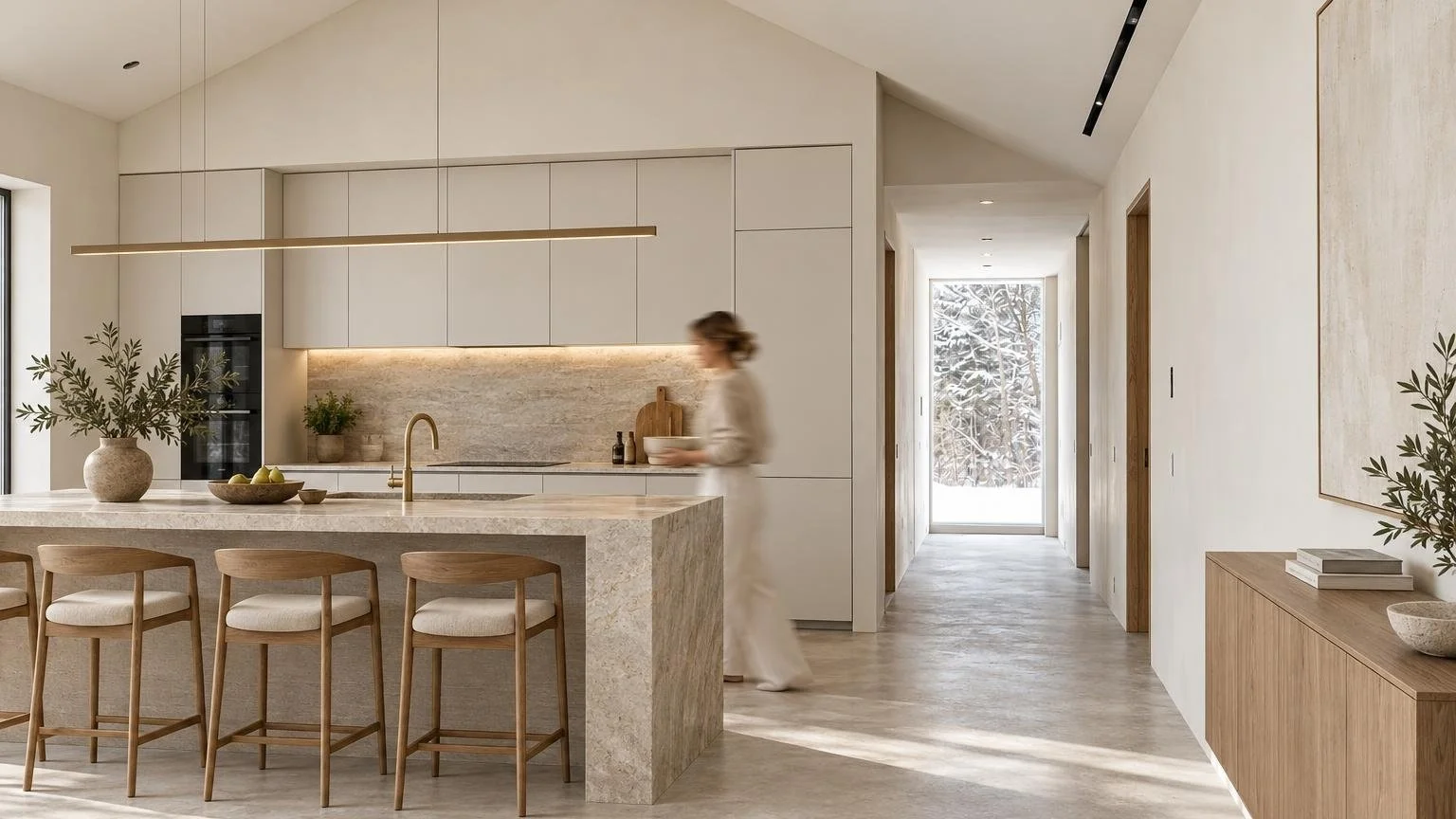
Noon
Clear daylight reveals the room in a neutral, balanced way, highlighting materials, colors, and proportions.
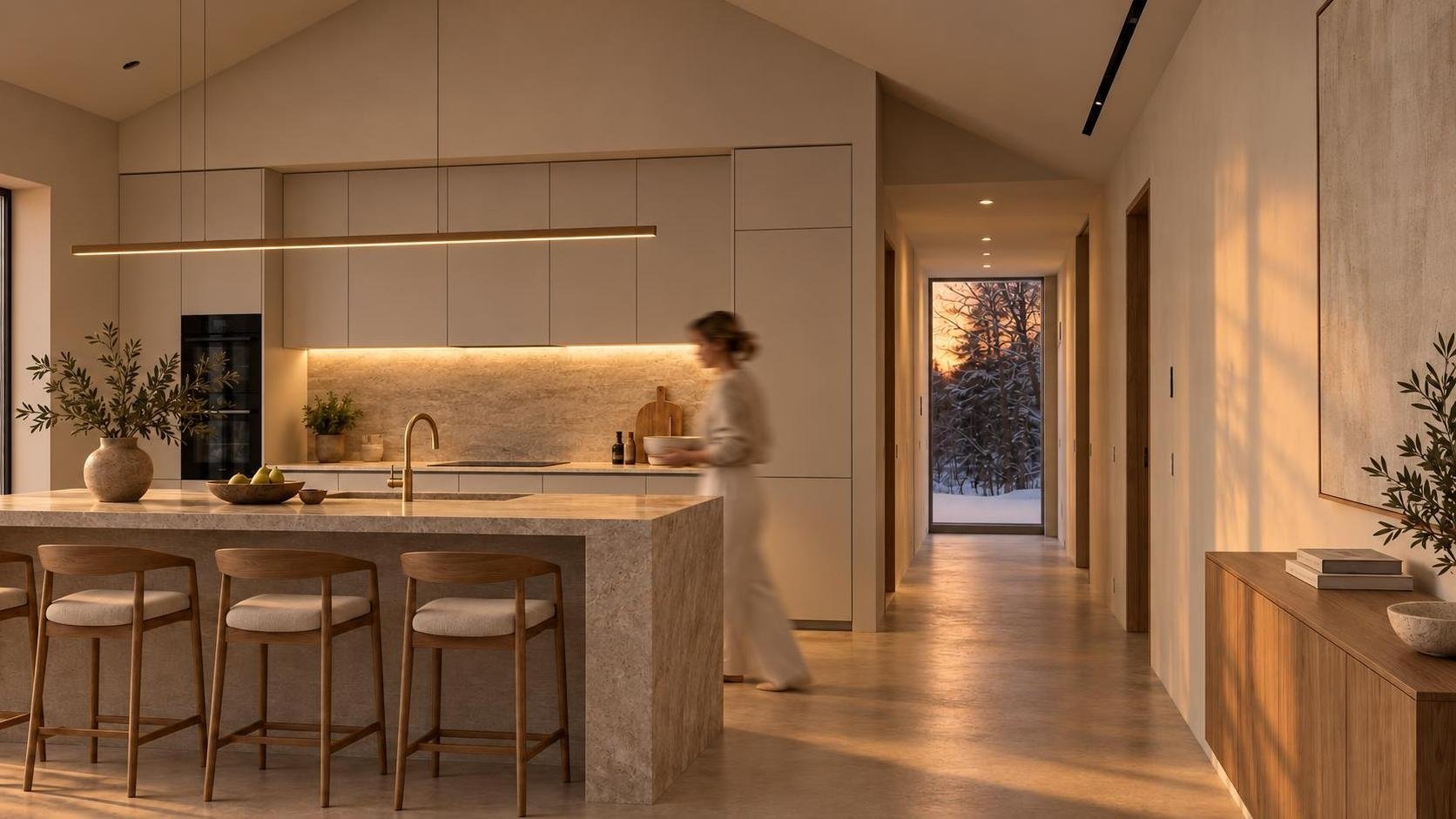
Evening
Warm evening light adds depth and comfort, giving the space a more relaxed and inviting mood.
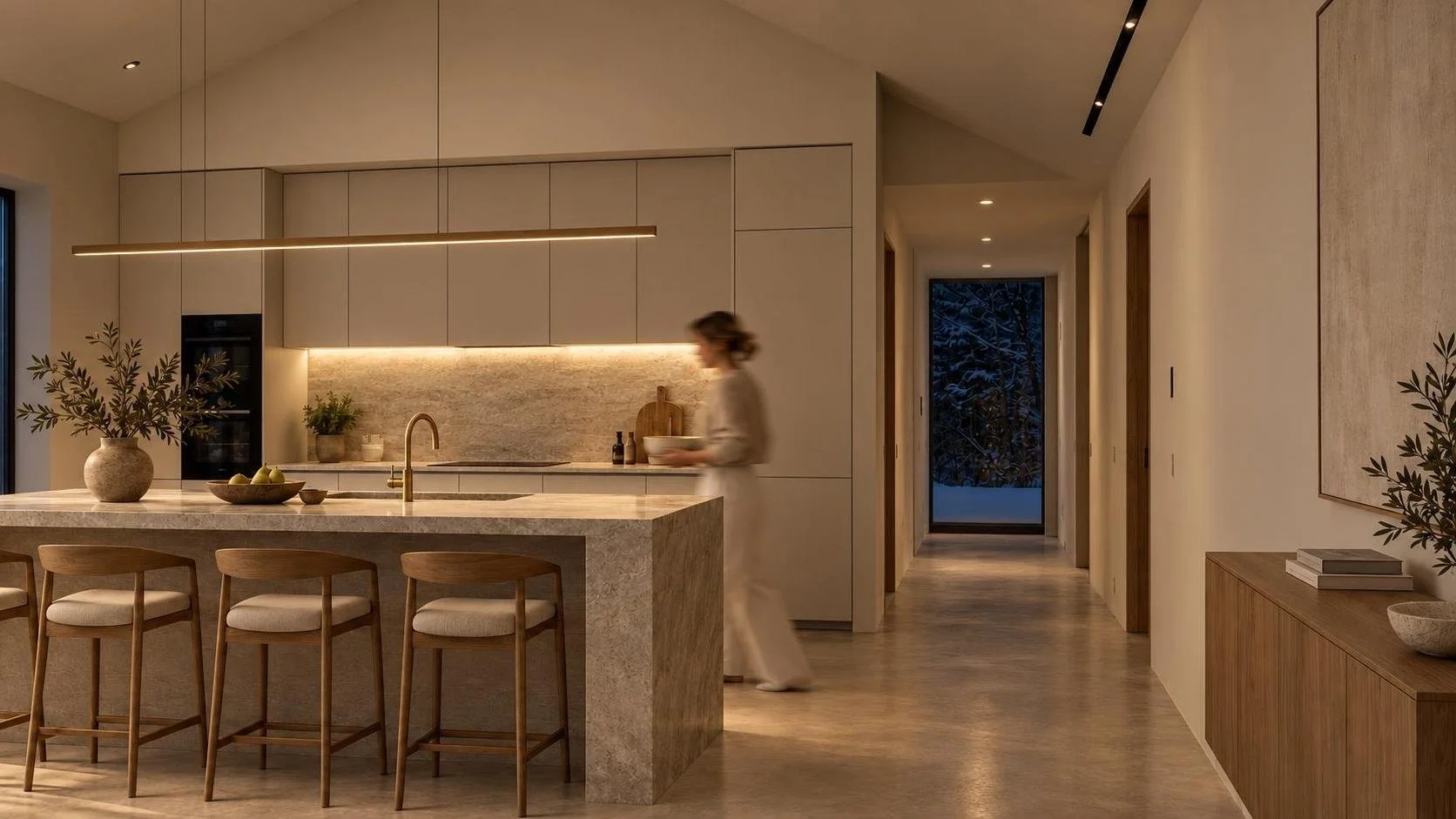
Night
Artificial lighting creates a more intimate atmosphere, emphasizing contrast, ambience, and selected focal points.
Extending the Experience Beyond the App
Connecting product discovery and interior inspiration with Roomico®.
I designed a browser extension that extends Roomico® beyond the app and connects it with the wider web.
It supports two complementary workflows.
Users can select elements from AI-generated interiors and search for visually similar real-world products.
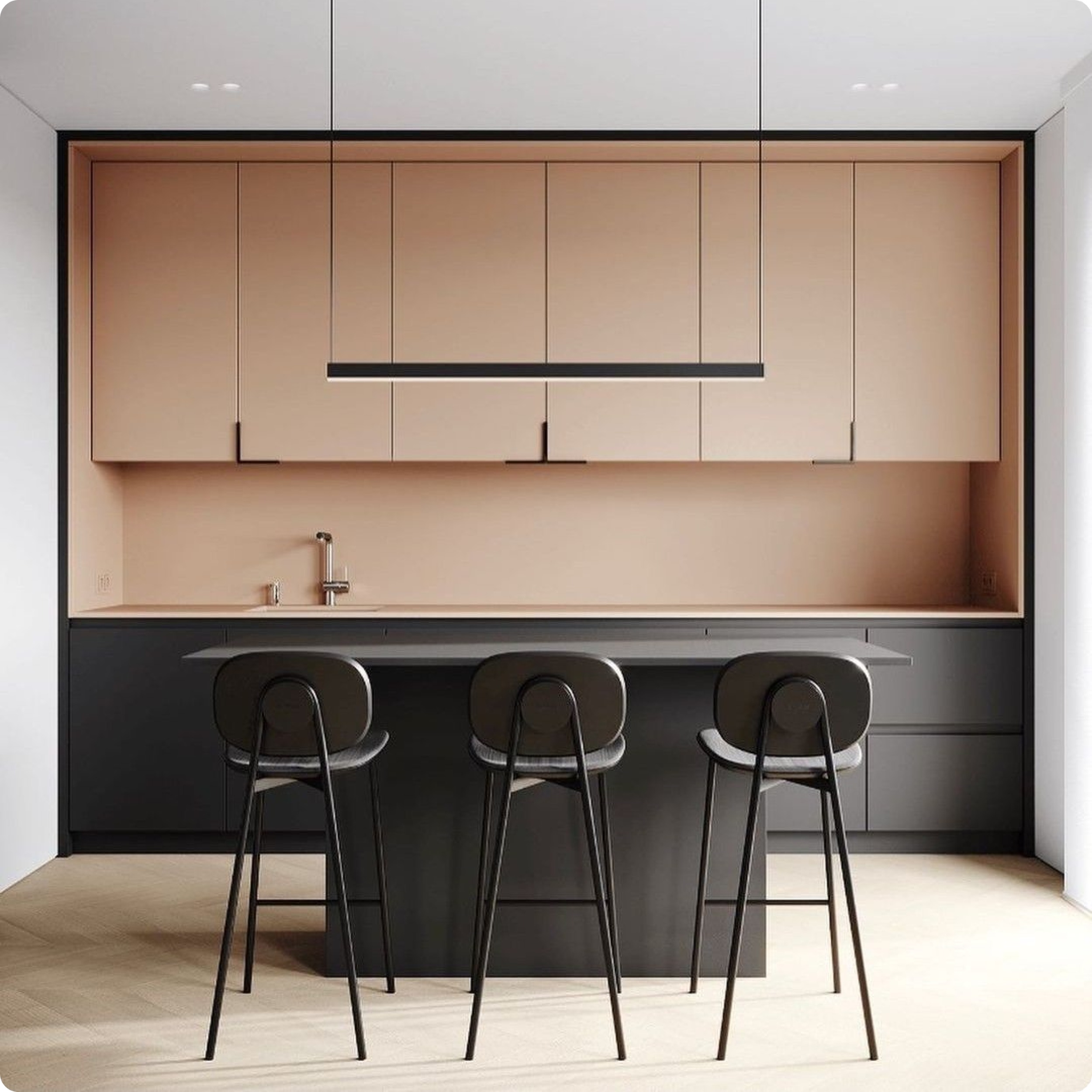
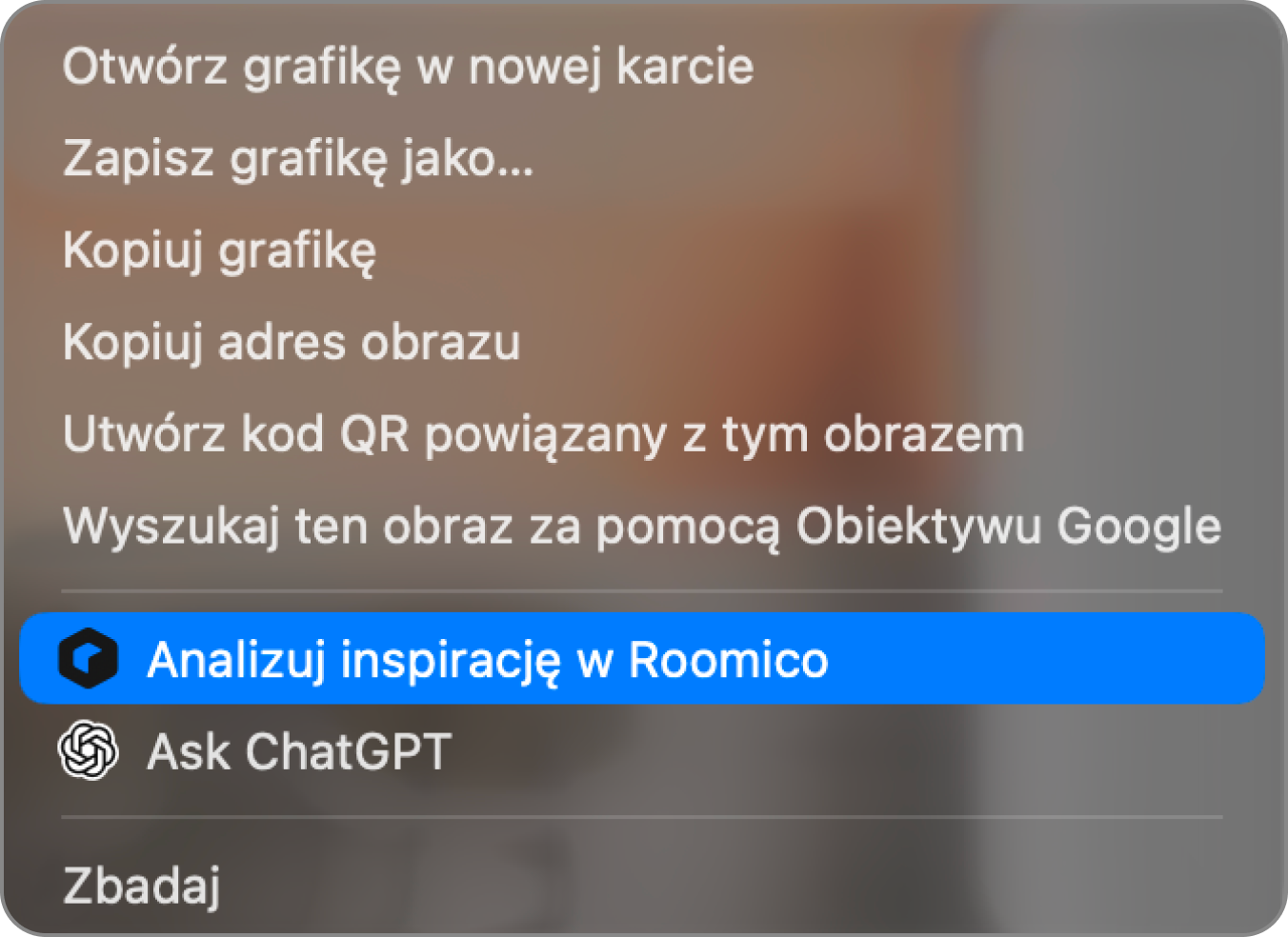
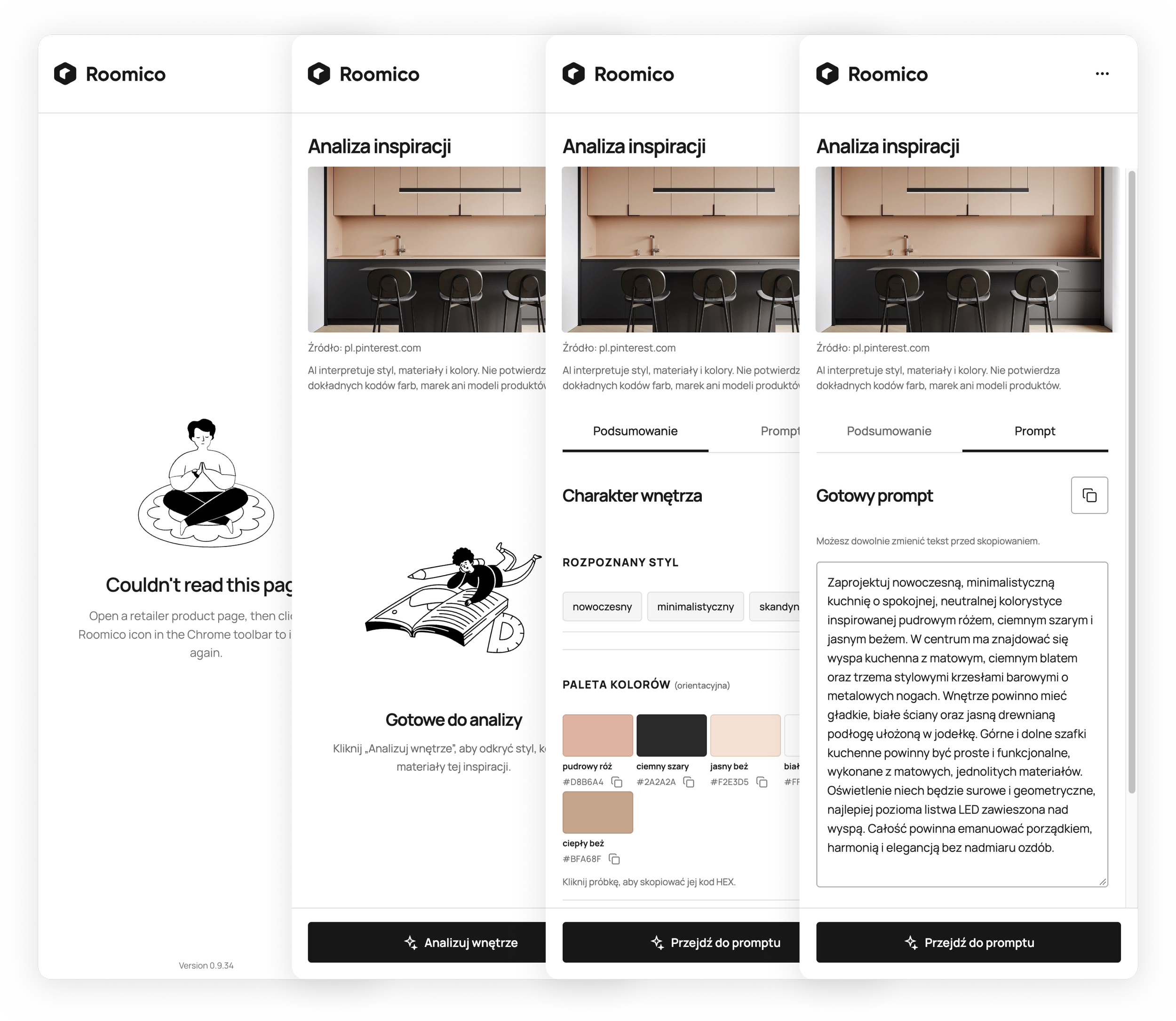
Users can analyze inspiring interior images found online and turn them into structured prompts for Roomico®.
This allows the extension to work in both directions: from AI visualizations to product discovery, and from visual inspiration to new AI-generated designs.
Rather than acting as a separate tool, the extension was designed as a connected part of the Roomico ecosystem, linking inspiration, product selection, and project organization.
The design challenge
How can a compact browser extension remain simple while supporting both product discovery and inspiration-driven prompt generation?
Workflows
AI visualization → Select hotspot → Search similar products
Interior inspiration → Analyze image → Generate prompt → Create a similar design in Roomico
Find Real Products from AI Visualizations
An AI-generated interior can be visually inspiring, but finding similar furniture, lighting, or materials in real stores is often a challenge.
Roomico allows users to select elements within a visualization through interactive hotspots and search for visually similar products using Google Images.
This creates a connection between an AI-generated concept and real-world product discovery, helping users move from inspiration toward practical purchasing decisions.
The workflow
Select an object in the visualization → Search with Google Images → Explore similar products.
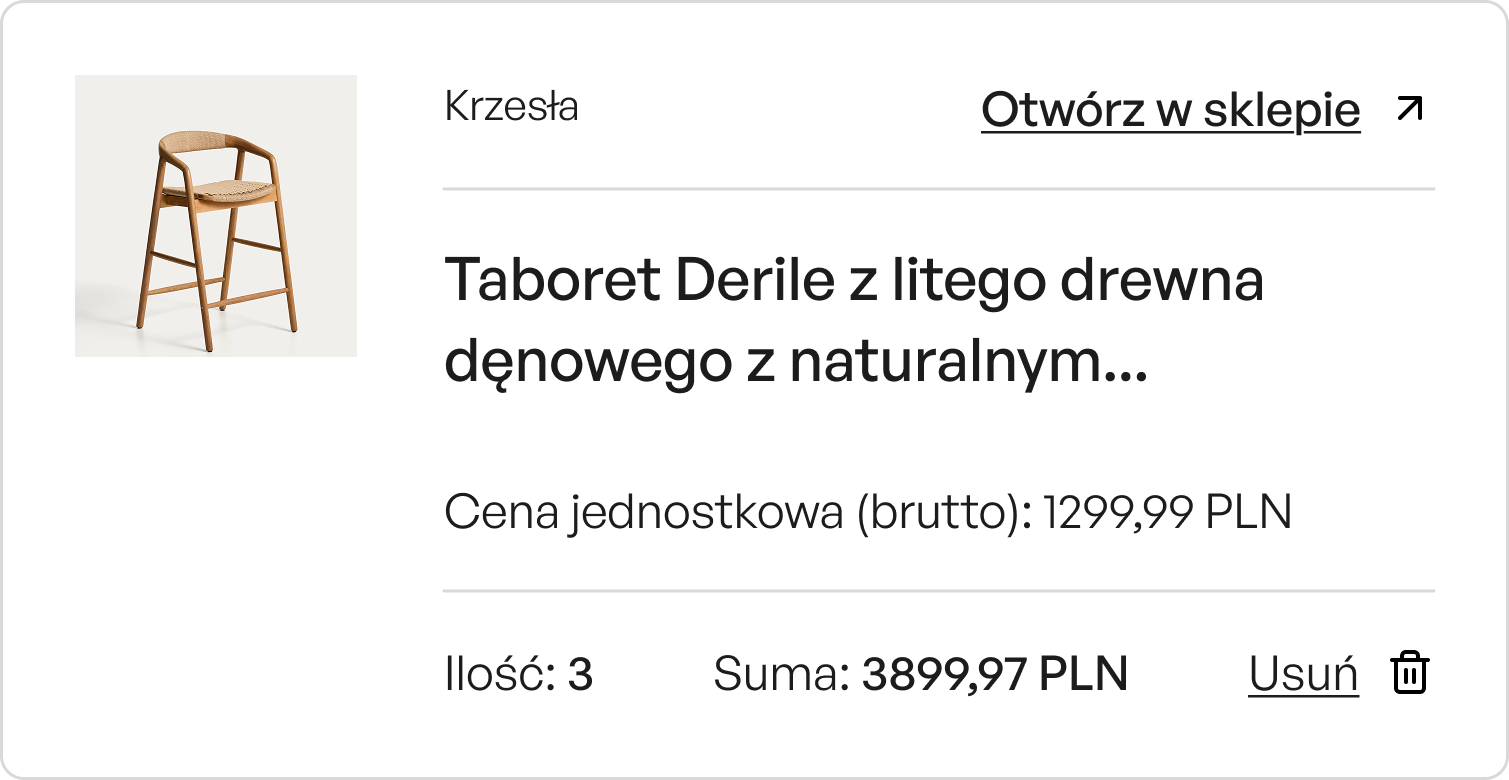
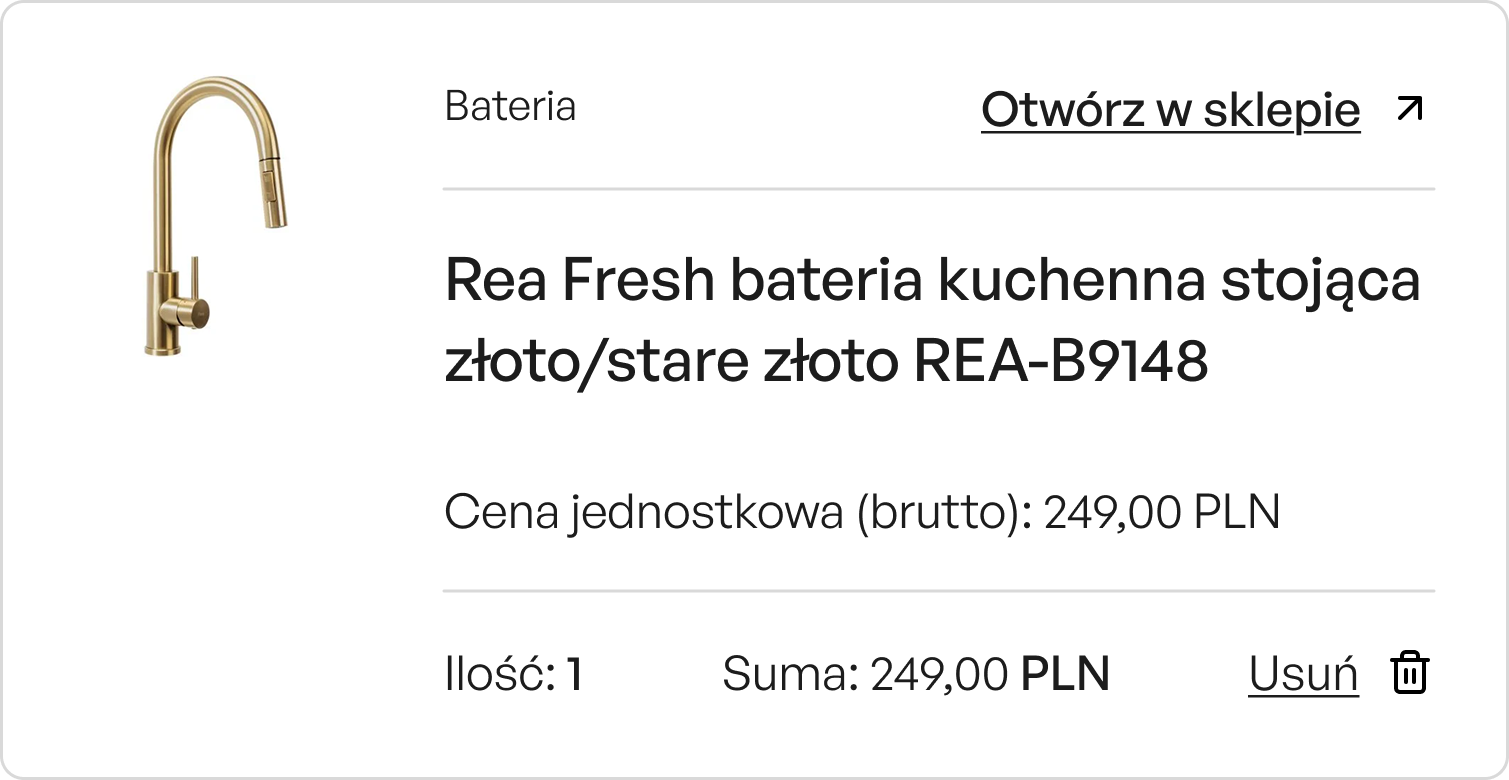
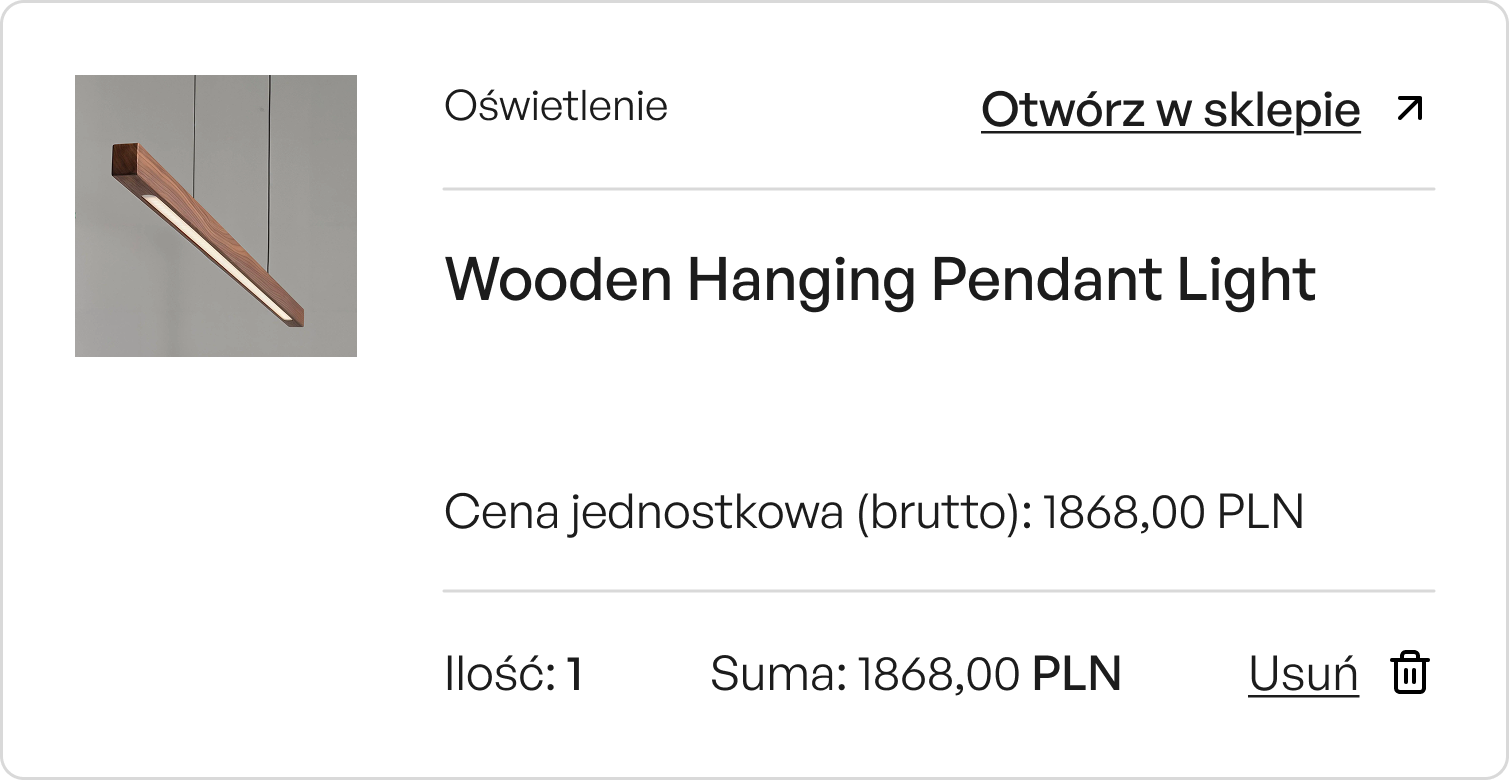
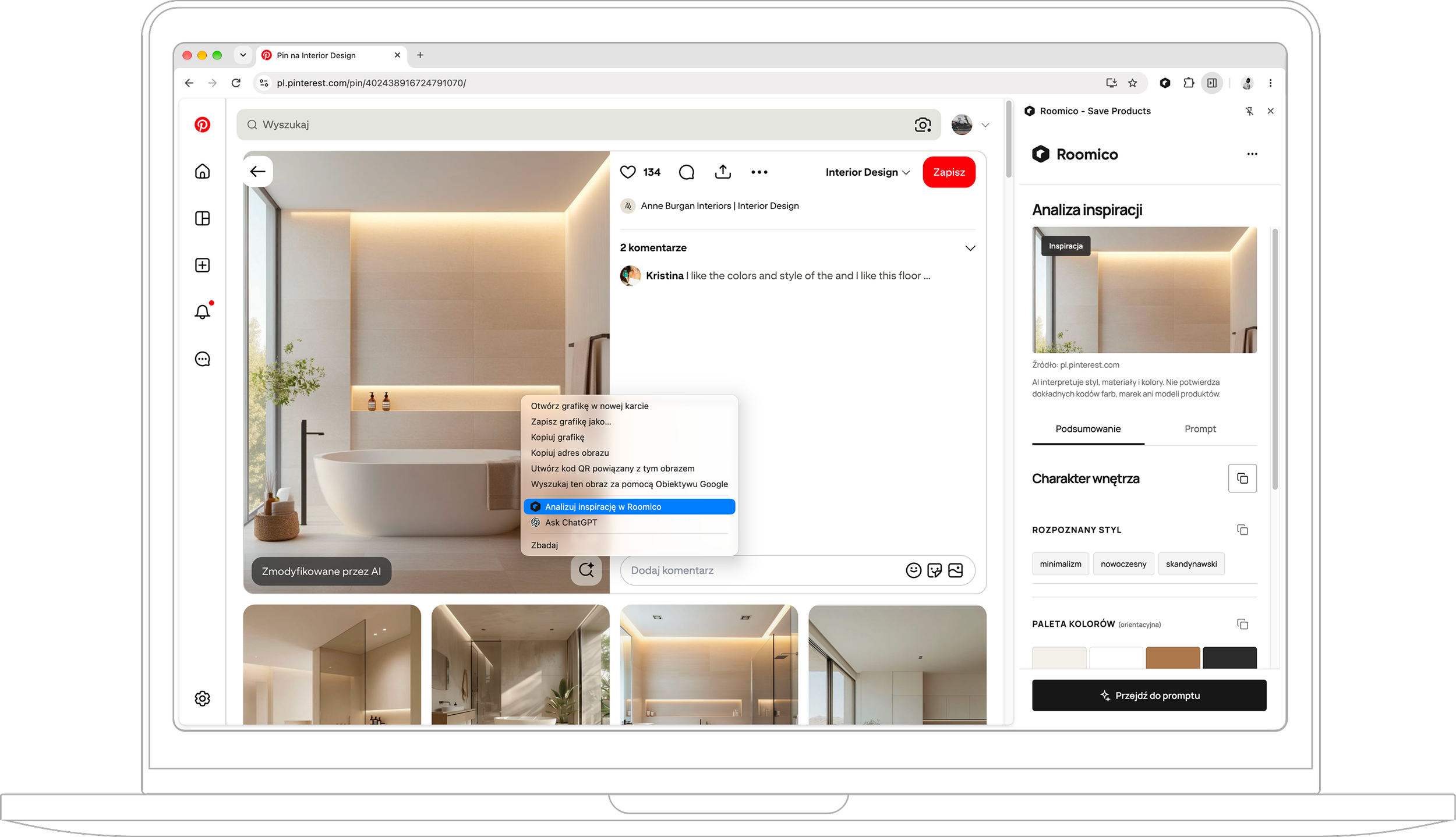
Image Analysis in the Chrome Extension
The Key Design Challenge
How might we connect visual inspiration, AI generation, and real-world product discovery without forcing users to switch between disconnected workflows?
My approach was to make the extension a natural part of Roomico's product ecosystem, allowing users to move in both directions: from AI-generated interiors to real products, and from real-world inspiration to AI-generated designs.
This transforms the extension from a simple browser utility into a bridge between inspiration, creation, and practical interior planning.
Turning AI-generated interiors into actionable shopping decisions.
An AI-generated interior can provide inspiration, but recreating the look requires finding real furniture, materials, and finishes.
To bridge this gap, I designed an interactive hotspot system that connects visual elements within a room to product discovery.
Users can explore a visualization, select objects or surfaces that interest them, and use Google-powered image search to discover visually similar products.
Instead of describing an item manually or switching between multiple tools, users can start their search directly from the visualization.
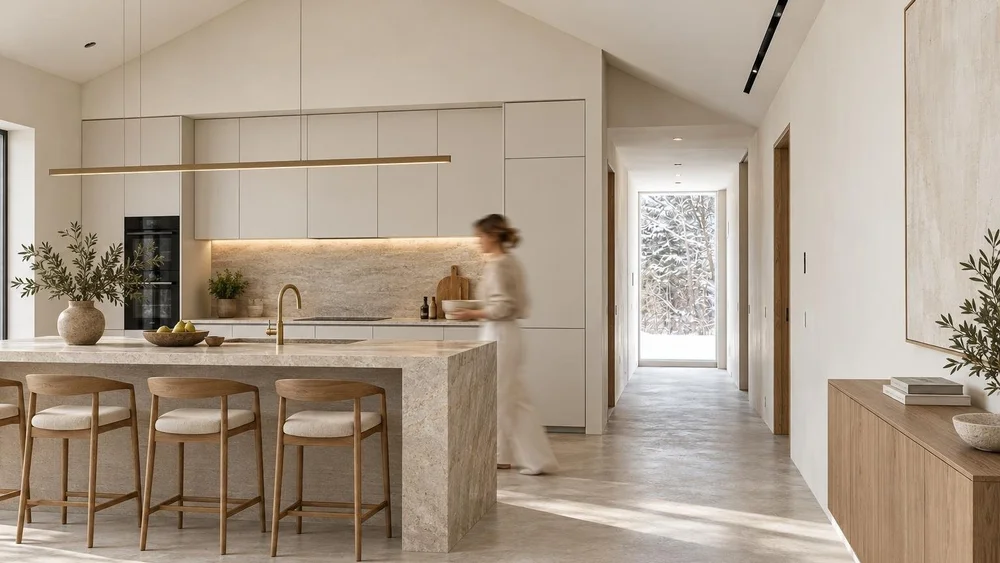 AI-generated visualization

Saved product price. Current price may vary.

Saved product price. Current price may vary.
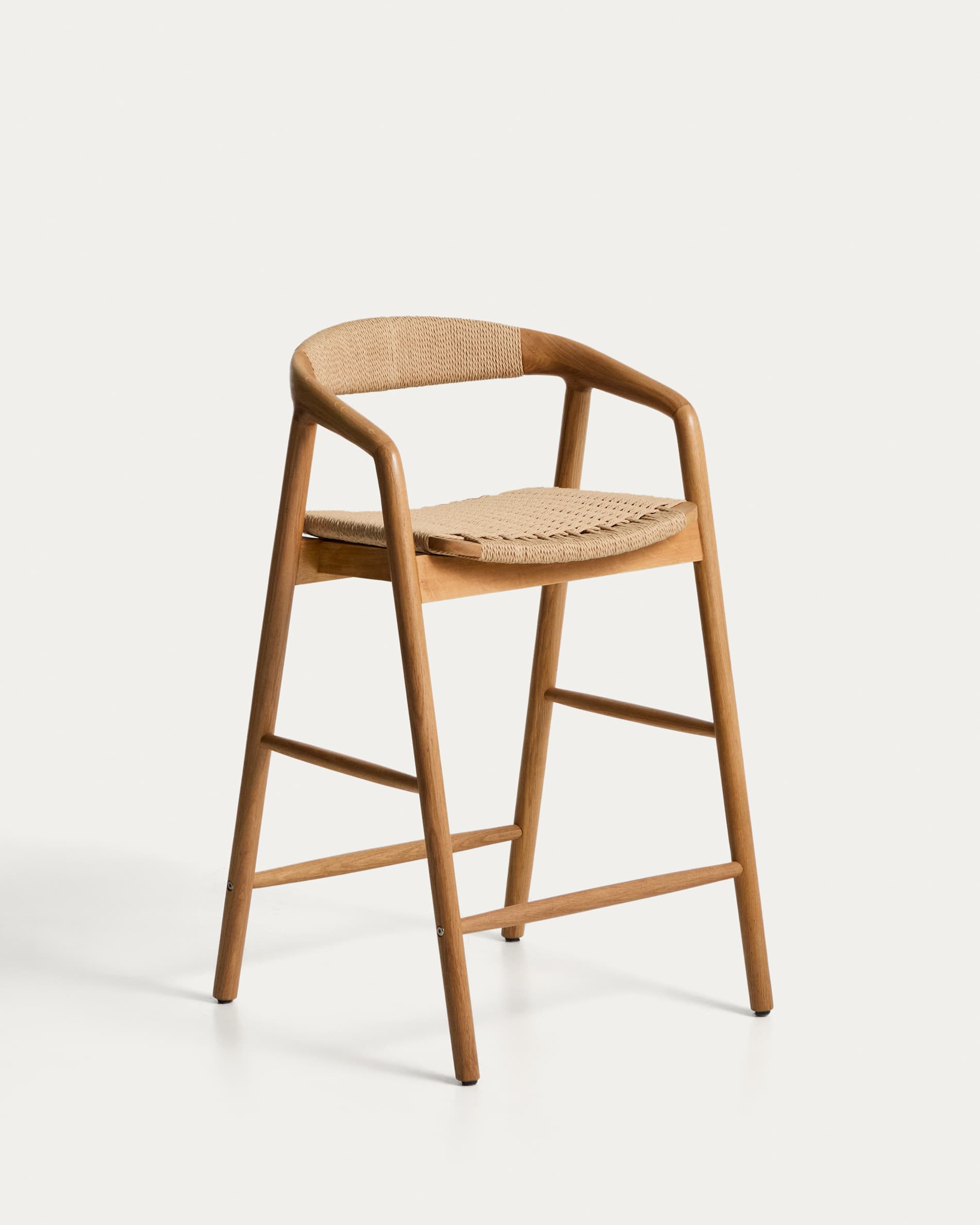
Saved product price. Current price may vary.
Turning ideas into actionable project information.
Interior visualization is only one part of the planning process.
Roomico® also supports practical tasks involved in preparing an interior project, including technical floor plans, project budgets, renovation cost estimates, and documentation.
Technical Floor Plans
The application supports creating technical floor plans to help users organize spatial information as part of their interior project.
This extends the experience beyond visual exploration and into more structured planning.
Project Documentation & PDF Export
Users can prepare project documentation and export it as a PDF.
By connecting project information with shareable documents, Roomico helps transform planning work into outputs that can be reviewed and used beyond the application.
Budgets & Renovation Estimates
Roomico helps users prepare project budgets and cost estimates covering materials and renovation work.
The design challenge was to make financial information understandable while keeping it connected to the broader project context.
Turning AI-generated interiors into actionable shopping decisions.
An AI-generated interior can provide inspiration, but recreating the look requires finding real furniture, materials, and finishes.
To bridge this gap, I designed an interactive hotspot system that connects visual elements within a room to product discovery.
Users can explore a visualization, select objects or surfaces that interest them, and use Google-powered image search to discover visually similar products.
Instead of describing an item manually or switching between multiple tools, users can start their search directly from the visualization.
AI-generated visualization
Saved product price. Current price may vary.
Saved product price. Current price may vary.
Saved product price. Current price may vary.
From Design to Production
Using AI-assisted development to turn ideas into working software.
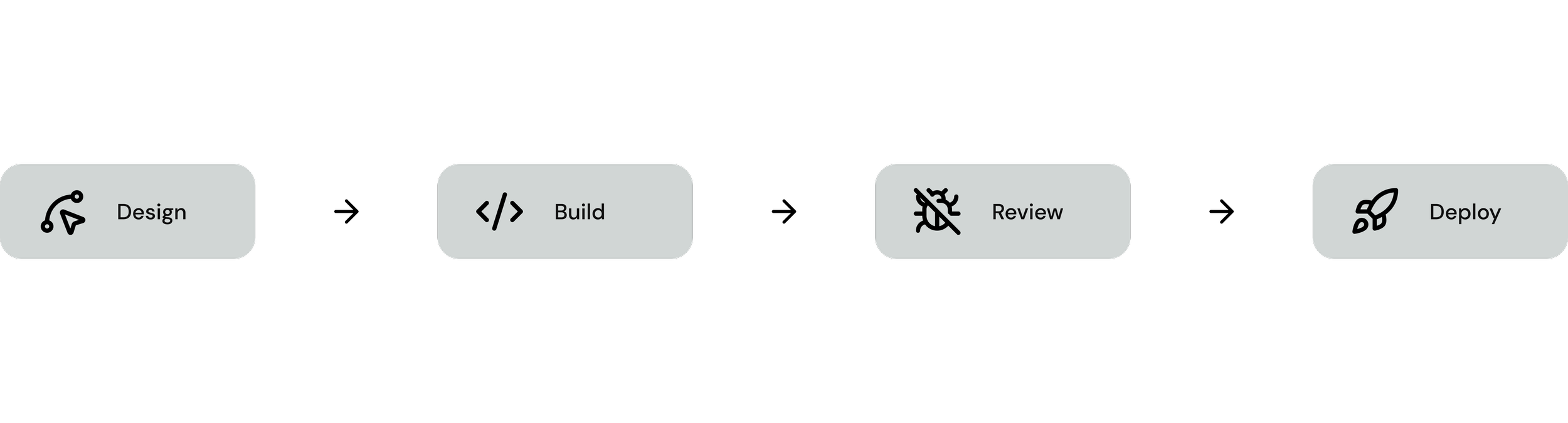
Roomico® was built through a workflow that combines product design, AI-assisted coding, technical integration, and continuous testing.
I use ChatGPT and Codex alongside GitHub to translate product requirements into implementation tasks, explore technical solutions, review changes, and iterate on working functionality.
The application is responsive, supports Google OAuth authentication, and runs on its own production domain.
Supabase provides backend infrastructure and data management, while Vercel supports application hosting and deployment.
Google-powered image search extends product discovery, connecting visual inspiration with interior planning.
This approach allows me to test product decisions in functioning software rather than relying exclusively on static prototypes.
Technology Stack
Product Design: Figma, UX/UI Design, Product Architecture
AI-assisted Development: ChatGPT, Codex
Version Control: Git, GitHub
Backend & Database: Supabase
Authentication: Google OAuth
Hosting & Deployment: Vercel
Product Discovery: Google-powered Image Search
Platforms: Responsive Web Application and Browser Extension
Why It Matters
Working closer to implementation has strengthened my understanding of technical constraints, system behavior, and the practical consequences of design decisions.
It also allows me to iterate on product ideas through a more direct connection between design, implementation, and testing.
Building for Reliability
Product quality goes beyond the interface.
Building a working product means considering not only usability and visual consistency, but also data integrity, access control, and predictable system behavior.
As Roomico evolved, I incorporated functional testing, edge-case analysis, and implementation reviews into the AI-assisted development process.
Managing AI Credits Responsibly
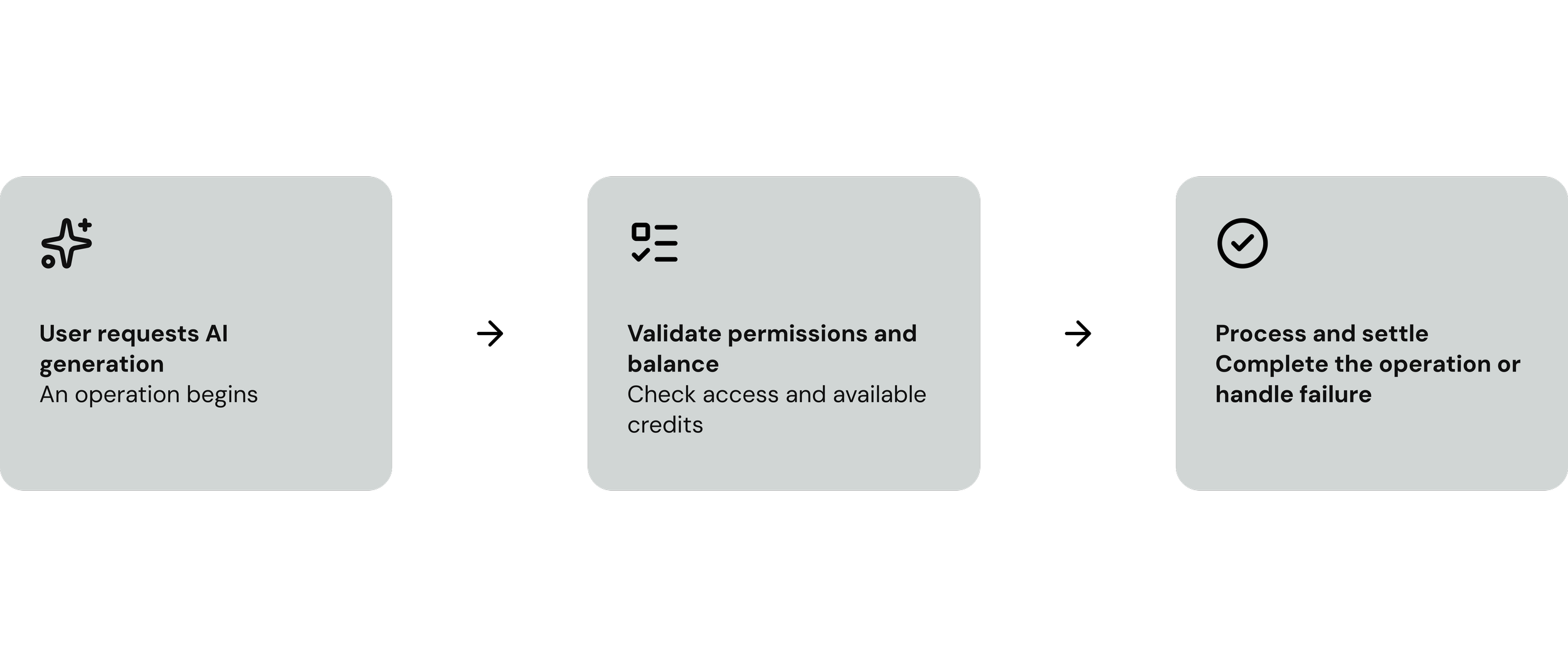
Roomico includes a credit-based model for AI-powered operations.
Because AI processing has real costs, credit accounting is an important part of the product's business logic.
This requires careful consideration of user authorization, available balances, transaction consistency, and the handling of unsuccessful operations.
I treat these requirements as part of the overall product experience - even when users never interact with the underlying logic directly.
Testing and Quality Assurance
I use iterative testing to evaluate whether new functionality behaves as intended, investigate unexpected results, and identify regressions.
Critical workflows require particular attention because errors can affect user data, access permissions, or the reliability of paid functionality.
Quality as a Product Decision
My goal is not simply to ship more features.
It is to build experiences that are understandable, reliable, and maintainable as the product grows.
Knowing When Not to Ship
Sometimes the right product decision is to remove a feature.
During Roomico's development, I explored an AI-assisted image editing feature that allowed users to describe desired changes through contextual comments.
The idea was to give users more control over generated interior visualizations.
However, repeated testing revealed challenges with image consistency, selective editing, and predictable results.
Despite multiple iterations, the feature did not consistently achieve the quality I wanted the product to deliver.
I decided to disable it rather than keep an unreliable experience available.
The Trade-off
Keeping the feature would have increased the number of capabilities available in Roomico, but at the cost of consistency and user trust.
Removing it allowed me to focus on more reliable parts of the experience.
The lesson
Product ownership isn't measured by how many features you launch. It's also reflected in the decisions you make about what should not be shipped.
The Outcome
A working product, not just a prototype.
Roomico® evolved from an independent product idea into a deployed application with connected workflows, AI-powered functionality, backend services, authentication, and a browser extension.
The product supports interior visualization, organization, technical planning, cost estimation, and project documentation.
It has been used in early testing and continues to evolve through product iterations.
Beyond the application itself, the project demonstrates my ability to connect product strategy, design decisions, technical execution, and quality assurance.
What I Learned
Building Roomico® changed the way I approach product development.
Working closer to implementation helped me better understand technical constraints, system dependencies, failure scenarios, and the impact of seemingly small UX decisions.
AI-assisted development made it possible to explore and implement ideas through a more direct workflow, while reinforcing the need for careful validation and product judgment.
My biggest takeaway
Designing a product is only the beginning. The real challenge is making it work, learning from its limitations, and continuously improving the experience.