Scaling a survey platform through a unified design system
I Led the design system evolution and core survey modules redesign to improve consistency, speed of delivery, and product scalability.
Role: Product Designer
Scope: Design system + survey modules
Areas: Dashboards • Survey creator • Logic • Mobile surveys • Pricing & checkout • Micro Surveys • Email Surveys
Duration: +/- 1 year
Context
Survicate® is a multi-channel survey platform used by product and marketing teams to collect user feedback at scale.
As the product expanded, the interface grew fragmented. Patterns diverged, components drifted, and new features increased visual and interaction debt.
This slowed delivery and created inconsistency across modules.
The problem wasn’t missing features. It was lack of system cohesion.
My role
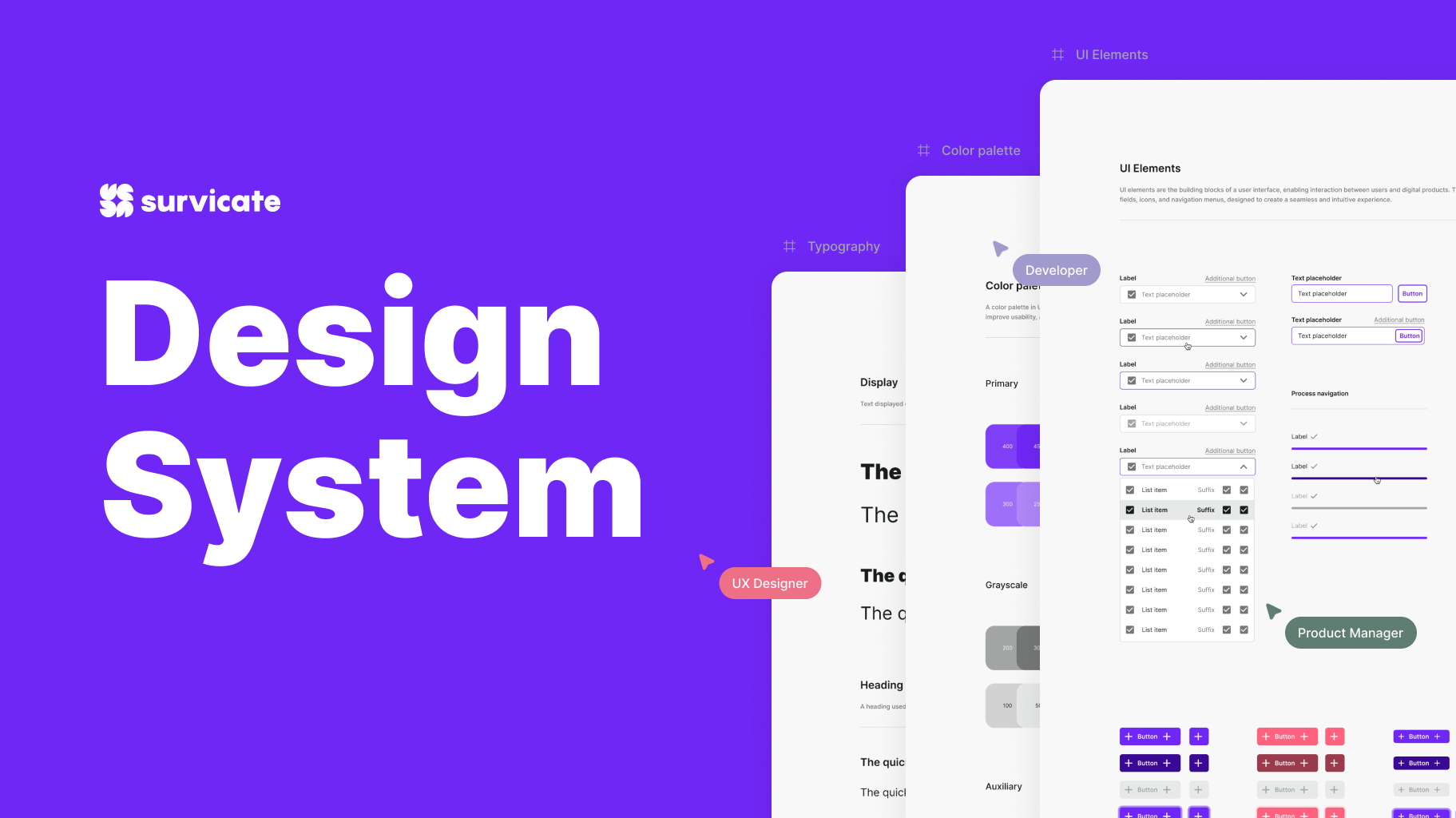
I worked on evolving the design system and redesigning key product modules to create a shared foundation across teams.
My responsibilities included:
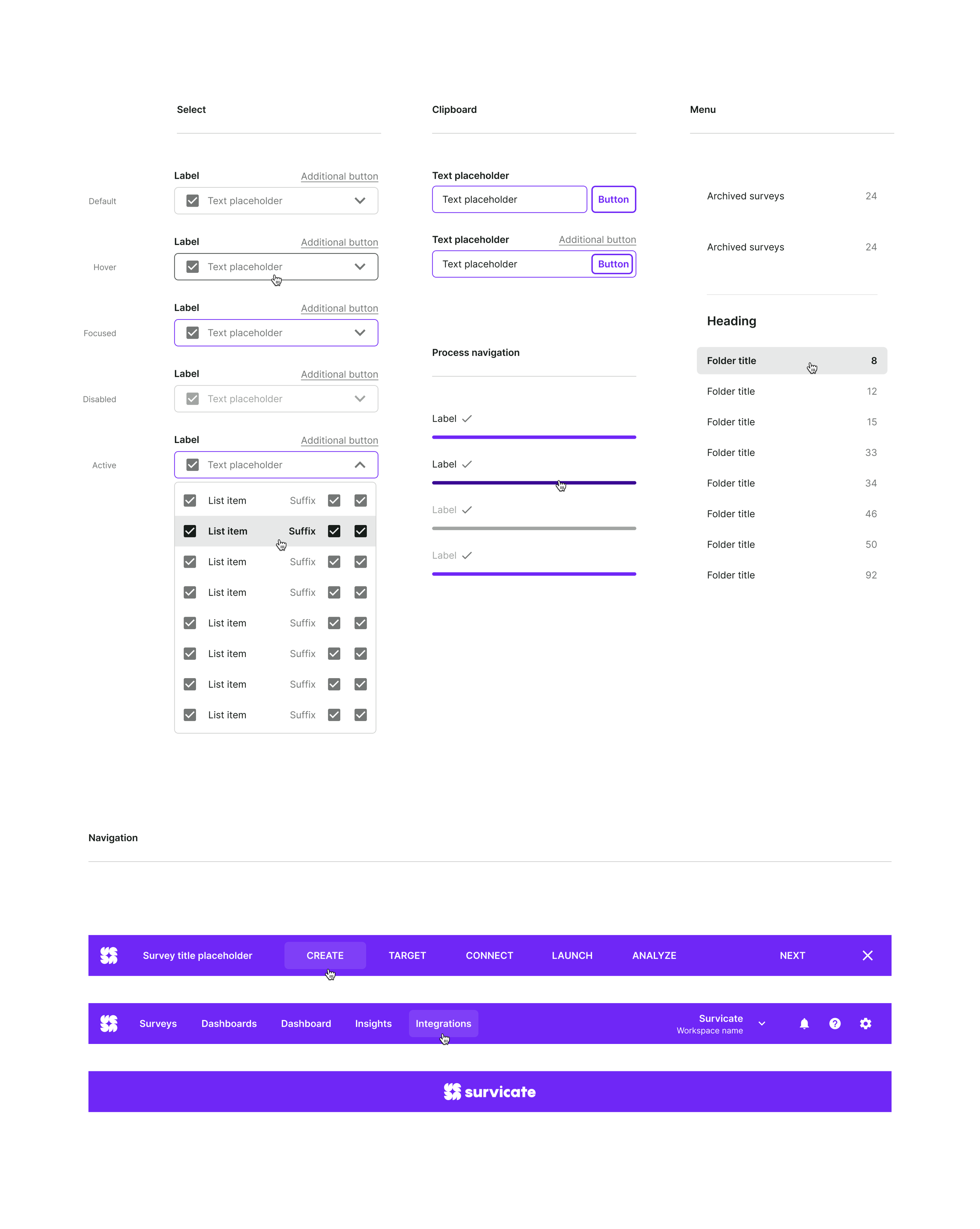
— defining reusable UI components
— aligning interaction patterns across modules
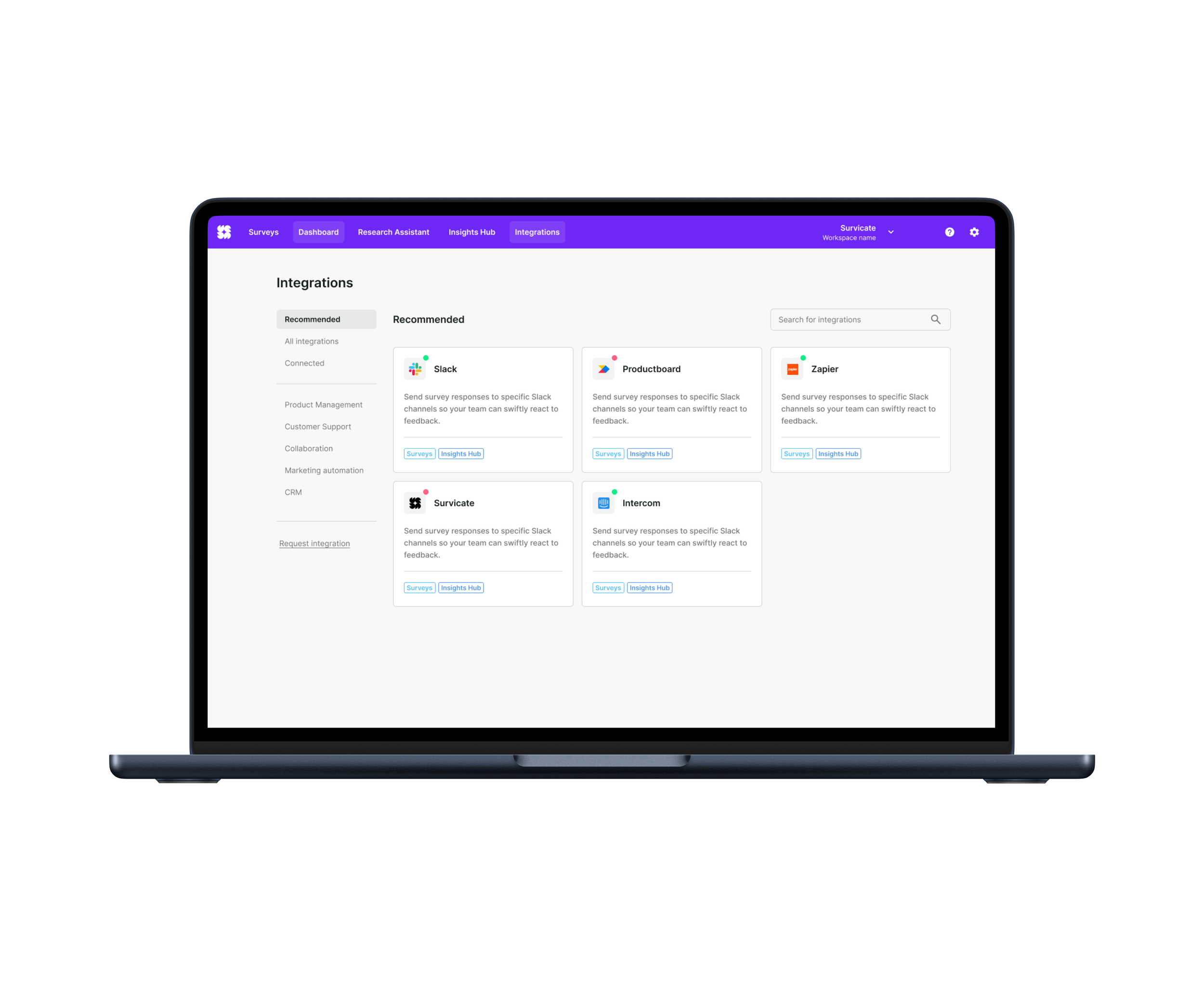
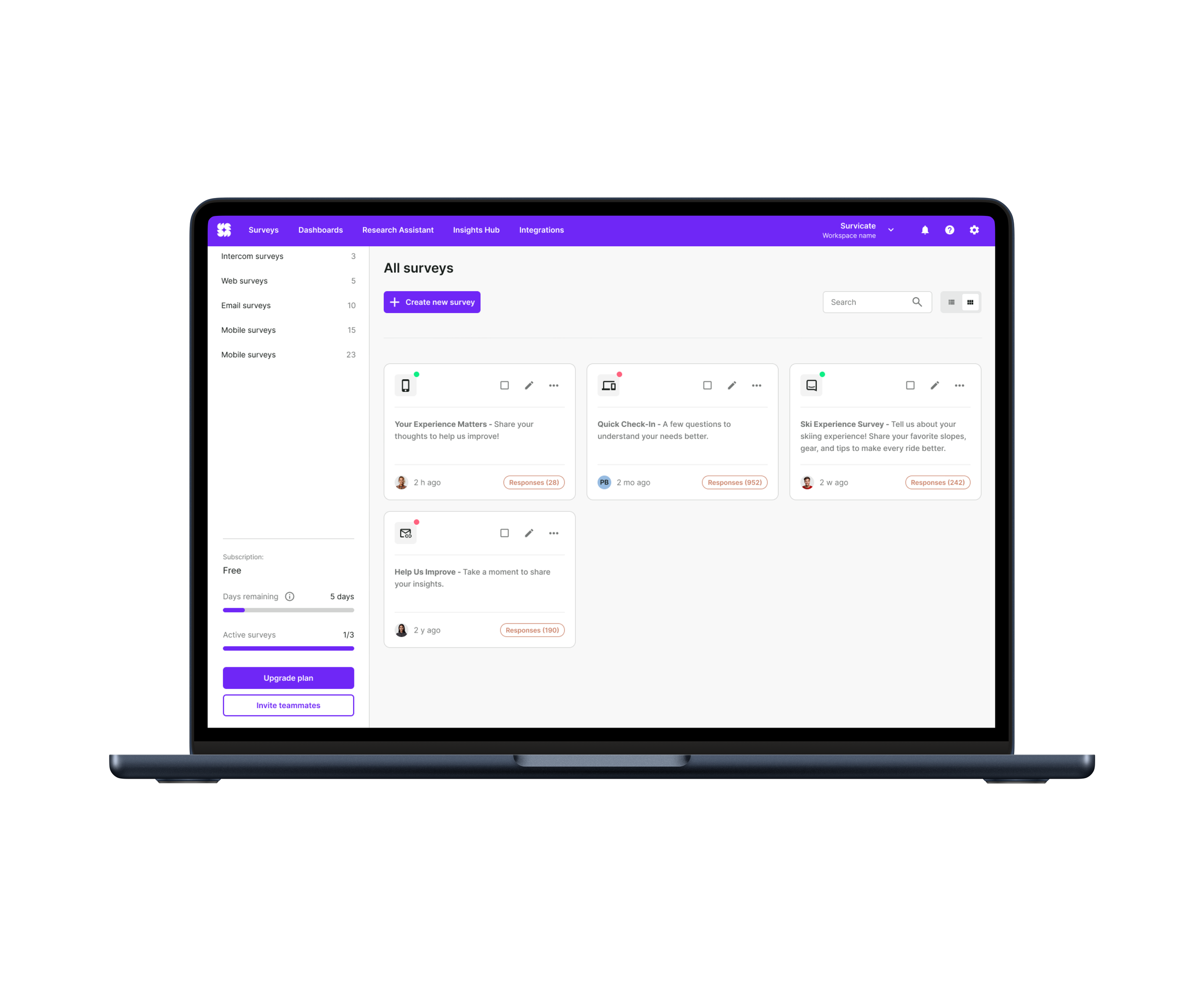
— improving dashboard structure
— redesigning survey creation flows
— standardizing logic and mobile experiences
— collaborating with engineering on system implementation
The goal was not visual refresh. It was structural clarity.
Strategic decision
Instead of redesigning screens individually, we shifted focus to system architecture. We treated the interface as a product ecosystem, not isolated features.
Key principles:
— consistency over novelty
— reusable components over one-off solutions
— predictable interaction patterns
— scalable token system
— design aligned with engineering constraints
This pivot allowed the product to grow without multiplying complexity.
Solution architecture
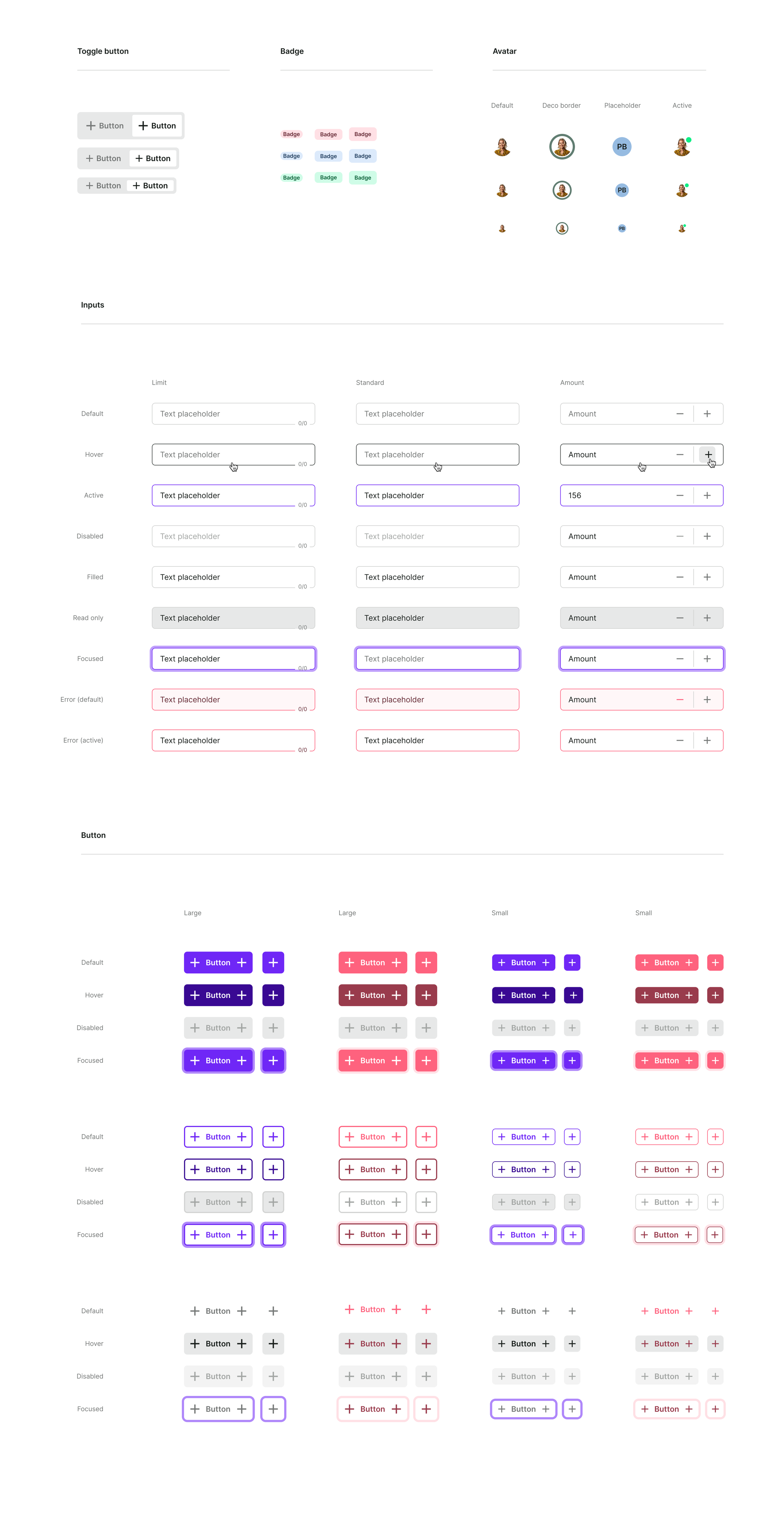
The work centered around building a unified component system and applying it across modules:
— modular dashboard structure
— standardized survey creator patterns
— shared logic UI components
— responsive mobile survey framework
— consistent form and state behaviors
— tokenized spacing and typography
Each module became part of the same language. Not separate tools stitched together.
Validation
The impact was measured through internal delivery metrics and product feedback:
— faster feature implementation (!)
— reduced design-engineering friction
— fewer UI inconsistencies (!)
— improved onboarding clarity
— better cross-team collaboration
The system improved not just the interface — but how teams worked.
Outcome
The design system became a scalable foundation for future growth.
New features could be built faster and with less ambiguity. The product felt cohesive across dashboards, survey creation, logic and mobile.
Consistency shifted from effort to default.